Importing wiper blades may seem straightforward, but small oversights often lead to big problems. A mismatched adapter, unclear specifications, or a wrong customs code can result in delays, returns, or products that simply don’t perform as expected. Because wiper blades are engineered assemblies—not generic parts—details matter. This wiper blade import sourcing checklist helps you confirm 20 critical points before ordering, so you can avoid common mistakes and source with confidence.
20 Things to Confirm Before You Place an Order for Wiper Blades

Strategic Sourcing Note: Before finalizing your wiper blade procurement, you must validate core performance metrics including rubber durability (100,000 cycles, Level 3/5 performance), pressure distribution (e.g., 4-point standard), and environmental resilience (70°C CCT). Verifying these precise technical specifications and supplier-side quality data is the only way to prevent costly batch rejections and ensure reliable field performance.
To ensure your wiper blade procurement meets OEM standards and avoids costly supply chain disruptions, we have categorized the 20 essential confirmation points into four critical pillars: Fitment, Material, Performance, and Logistics.
| Category | Confirmation Point | Target Specification / Standard |
|---|---|---|
| Fitment & Interface | 1. Arm Interface Geometry | Exact dimensions (e.g., 9×3, 9×4, 7×2.6mm) |
| 2. Adapter Compatibility | Multi-clip or specific OE-fit connectors | |
| 3. Sizing Accuracy | Precise mm/inch conversion; No arm interference | |
| 4. Pressure Points | 4, 6, or 8 points based on blade type | |
| 5. Clip Stability | Zero oscillation; specific rotational torque | |
| Materials & Compliance | 6. Rubber Composition | Natural Rubber, EPDM, or Silicone Grade |
| 7. Surface Treatment | Graphite or Teflon (PTFE) coating | |
| 8. Steel Spring Quality | High-Carbon Steel with curvature memory | |
| 9. Chemical Compliance | Valid RoHS 2.0 & REACH certificates | |
| 10. Polymer Integrity | POM COA for all plastic assemblies | |
| Performance Testing | 11. Durability Cycles | 100,000 to 500,000 wiping cycles |
| 12. Wiping Quality | Level 3/5 performance post-durability test | |
| 13. Corrosion Resistance | 70°C CCT (Cyclic Corrosion Test) compliance | |
| 14. Rubber Pull-out Force | Safety-tested detachment strength | |
| 15. Thermal Resilience | Stable performance from -40°C to +80°C | |
| Logistics & Commercial | 16. Customs Classification | Verified HS Code (e.g., 8512.40.00) |
| 17. Batch Traceability | Production codes on products/packaging | |
| 18. Manuals & Guides | Accurate, multi-language install instructions | |
| 19. Packaging Durability | Crush-test rated for international freight | |
| 20. Inspection Acceptance | Agreed AQL levels for 3rd party audits |
I. Fitment & Interface Precision (Critical for Compatibility)
- Arm Interface Geometry: Confirm exact dimensions (e.g., 9x3mm / 9x4mm J-hook, 7×2.6mm side pin) to match your target vehicle parc.
- Adapter Family Compatibility: Verify if the order includes Multi-clip adapters or specific OE-fit connectors (B2, C1, etc.).
- Blade Length Accuracy: Ensure sizes are cataloged in both millimeters (mm) and inches to prevent windshield overlap or motor strain.
- Pressure Point Count: For conventional blades, confirm if it’s a 4-point, 6-point, or 8-point structure for optimal force distribution.
- Refill Rail Scoring: Verify that 25 mm scoring increments are present on refill rails for precise length adjustment.
- Clip Rotational Torque: Check that the clip’s lateral movement meets criteria to prevent oscillation and wind lift at high speeds.
II. Material Science & Compliance (Market Access)
- Rubber Composition: Confirm if the refill is Natural Rubber (NR), Synthetic EPDM, or Silicone, and its specific ozone resistance rating.
- Surface Treatment: Verify the use of Graphite coating or Teflon(PTFE) to minimize friction and noise (chattering).
- Spring Steel Grade: Ensure the use of High-Carbon Steel with a specific curvature memory to maintain even pressure over time.
- RoHS & REACH Certification: Demand valid certificates to ensure all polymer and rubber parts are free from restricted hazardous substances.
- POM COA: For plastic components, request a Polyoxymethylene Certificate of Analysis to guarantee structural rigidity in extreme temperatures.
III. Performance & Durability Testing (Quality Assurance)
- Wiping Cycle Longevity: Confirm the product survives 100,000 to 500,000 cycles with a minimum Level 3/5 wiping performance post-test.
- Cyclic Corrosion Resistance (CCT): Verify the frame can withstand 70°C salt spray cycles without rusting.
- Rubber Pull-out Strength: Measure the force required to detach the rubber from the frame (a key safety safety check).
- Temperature Resilience: Confirm operational stability between -40°C and +80°C to avoid rubber hardening or melting.
- Aerodynamic Performance: For hybrid or flat blades, verify the spoiler design maintains contact at speeds up to 120 km/h.
IV. Logistics & Commercial Documentation (Risk Mitigation)
- HS Code 8512.40.00: Confirm this specific classification to avoid customs misclassification and duty penalties.
- Batch Traceability: Ensure each unit or inner box has a production batch code for quality recall management.
- Installation Instruction Clarity: Verify that the technical illustrations are accurate for the specific adapter types ordered.
- Packaging Integrity: Confirm the outer carton crush-test rating to protect the delicate rubber lip during long-haul sea freight.
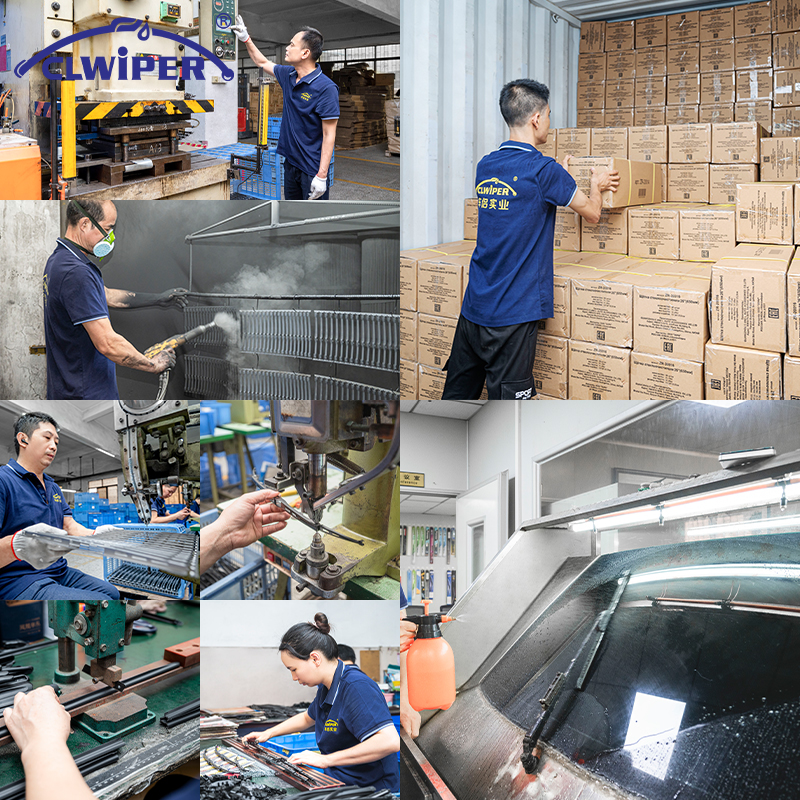
Trusted Partner for High-Performance Wiper Blade Manufacturing
Technical Fundamentals: Aligning Your Checklist with Product Specifications

Understanding the 20-point verification list is essential, but to apply these standards effectively, they must be aligned with the specific wiper technologies and measurement systems used in your target market. Before finalizing your procurement files, you should categorize your order based on three foundational technical pillars: structure type, sizing accuracy, and connection systems.
Different Types of Wiper Blade
Selecting the correct wiper blade structure is a strategic decision based on your target market’s climate and vehicle demographics. There are three primary architectures that dominate the global automotive aftermarket:
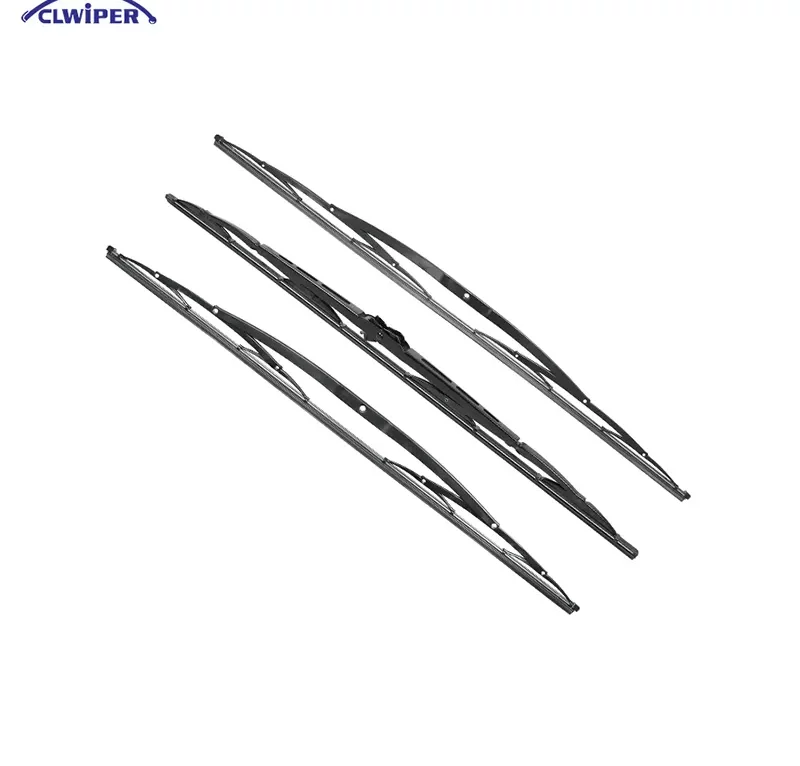
- Conventional (Frame) Blades: This traditional design utilizes a metal framework with multiple pressure points to hold the rubber refill against the windshield. Despite the rise of newer technologies, conventional blades remain a high-volume product in many regions due to their cost-effectiveness and durability in high-heat environments.
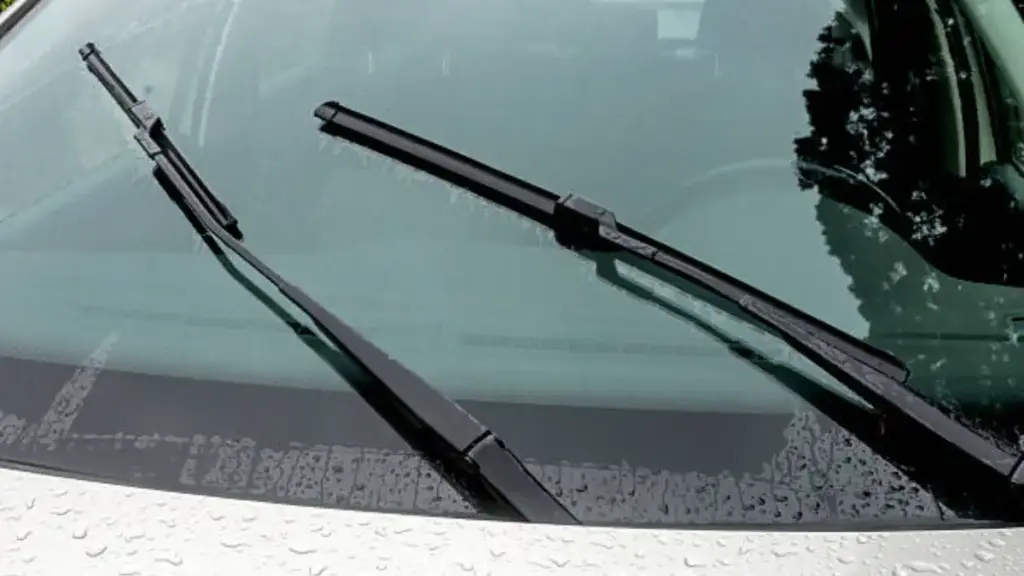
- Beam (Flat) Blades: Unlike framed blades, beam wipers feature a bracketless design with a tensioned internal spring steel strip. This allows for a more aerodynamic, low-profile structure that provides even pressure distribution across modern, curved windshields. They are the standard for most late-model European and North American vehicles.
- Hybrid Blades: These combine the aerodynamic advantages of a flat blade with the robust pressure distribution of a traditional frame. Encased in a sleek plastic shell, hybrid blades are particularly prevalent as Original Equipment (OE) on Japanese and Korean vehicle brands.
For an importer, maintaining a balanced inventory across these three types is essential to satisfy both budget-conscious consumers and owners of premium, modern vehicles.
Wiper Blade Size and Measurement Standards
Precision in sizing is critical to avoid operational failures such as “blade clashing” or insufficient wiping area. In the global trade of wiper blades, sizes are typically measured in both inches and millimeters, ranging from 11″ (275mm) to 28″ (700mm).
When planning an import order, it is important to understand that sizing is not just about the length of the blade, but also about the clearance required for the wiper arms to operate without interference. A common mistake in procurement is ignoring the “Sizing Ratio” of a specific market. For example, a market dominated by compact city cars will require a higher volume of 16″ to 22″ blades, whereas markets with a high density of SUVs and light trucks will demand larger sizes like 24″, 26″, and 28″.
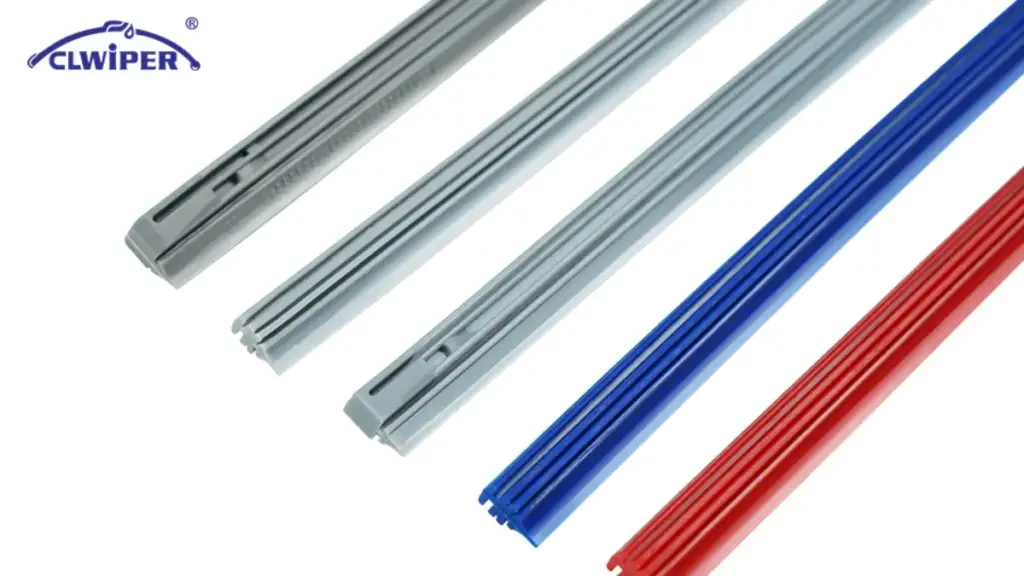
Furthermore, the “Refill Width” (typically 6mm, 8mm, or 10mm) must be confirmed if you are importing refills separately. For B2B buyers, verifying these dimensions against a structured vehicle application database is the only way to ensure that the imported stock aligns with local car parc requirements and avoids the risk of slow-moving inventory.
Evolution of Wiper Arm Adapters and Connection Systems
The connection system is often the most complex aspect of wiper blade sourcing. Because vehicle manufacturers utilize various arm designs to secure the blade, importers must choose between three primary adapter strategies to ensure maximum vehicle coverage.
- Universal Hook Systems: Historically, the 9x3mm and 9x4mm J-hook designs covered the vast majority of vehicles. While still essential for older models and specific regions, relying solely on hook-type connectors will exclude a significant portion of the modern vehicle market.
- Multi-Clip Adapter Systems: To solve the problem of high SKU counts, many wiper blade manufacturers offer a multi-clip system. This involves a single blade body that can be fitted with one of several interchangeable plastic adapters (covering Side Pin, Pinch Tab, Bayonet, etc.). This strategy allows an importer to cover up to 99% of the market with a minimal number of base blade units.
- OE-Specific Connectors: Some premium markets prefer “Direct Fit” blades, where the adapter is pre-installed for a specific vehicle model. While this increases the number of SKUs you must manage, it offers the end-user a more reliable and professional installation experience.
Final Thoughts
Ultimately, importing wiper blades is far from a simple commodity transaction; it demands a rigorous, multi-faceted approach. This comprehensive checklist serves as your essential defense against the common pitfalls of sourcing complex engineered automotive components. By meticulously verifying every detail – from precise dimensional tolerances and material certifications to trade compliance and performance benchmarks – you proactively safeguard against costly rejections, operational delays, and diminished product reputation.
Implementing such a robust checklist transforms your sourcing process from reactive problem-solving to proactive risk mitigation. It fosters unparalleled transparency and accountability across your internal teams and with your suppliers, ensuring that every order meets stringent quality, safety, and regulatory standards. The result is a streamlined supply chain, consistently high-performing products that delight customers, and a fortified competitive edge in the demanding automotive aftermarket.
Frequently Asked Questions
What should I confirm about wiper products and quality before ordering?
Before ordering wiper products, confirm compliance with standards like VW TL 934 (2021-04) or SAE J198 for systems including motors, arms, blades, and linkages; verify test passes for corrosion (e.g., 240-hour salt spray per DIN EN ISO 9227, no red rust Ri 0), durability (e.g., 1,500,000 cycles), static wiping quality (haze and pin stripes tests), climatic performance (-30°F to 120°F, no functional impairment), and contact force retention (≤10% decrease after 60 corrosion cycles per PV 1210).
What packaging and carton details must be agreed for safe shipping?
For safe shipping of wiper imports, agree on corrugated boxes made of combined board meeting or exceeding 200# burst strength or 32 ECT (edge crush test), with UN-certification for hazardous goods if applicable, and validated via ASTM D4169 or ISTA 3A pre-shipment testing for drop, vibration, compression, and stacking; include 3-4 inches of protective cushioning, proper void fill, and hazard labeling per DOT/IATA/UN regulations.
What should I check about a wiper factory before I trust them with an order?
Before trusting a wiper factory with an order, verify that they can meet recognised automotive test standards (e.g. ISO/SAE for wiper durability and performance), provide documented quality management certification (ISO 9001 or IATF 16949), and pass a sample‑based performance test on your exact wiper design covering sweep quality, speed settings, and lifespan under environmental stress. You should also require a written inspection checklist at outgoing QC (covering wiper arm/blade condition, speed settings, full glass coverage, and correct fitment) similar to OEM vehicle inspection programs used by brands like Audi and Honda.
Which points about price, payment and shipping terms must be clear in the PI?
For a Proforma Invoice (PI) in an import context, the buyer and seller should lock in (1) unit price and total contract value including any discounts and surcharges, (2) explicit payment terms (e.g. Net 30/60/90, advance %, LC terms), and (3) detailed shipping terms (Incoterm, delivery point, responsibilities and cost allocation for freight, insurance, duties, taxes, and risk of loss). These must be stated in numbers and standard terms, not left implicit. Typical elements that must be clear in the PI, based on standard PO/contract practice: price terms (unit price, total price, firm fixed price, inclusions/exclusions for packing, shipping, duties, VAT, and any discount terms); payment terms (exact payment period like Net 30-90 days, advance payments, conditions for ‘correctly presented’ invoices, payment contingent on acceptance, and right to withhold disputed amounts); and shipping and delivery terms (exact Incoterm with version and named place, responsibility for costs like packing/insurance, risk of loss and title transfer point, delivery schedule, allowance for partial shipments, penalties for late delivery, and documentation requirements for shipping).
What customs and logistics details need to be fixed before shipment?
Before shipping wiper imports to the US, fix HS tariff classification (e.g., 8512.90.9000 for blades, 8512.40.4000 for wipers), NHTSA Form HS-7 declaration confirming FMVSS compliance or exemption (e.g., for parts like wipers under 49 CFR 591.5), EPA Form 3520-1 for emissions if applicable, and bond at 150% of dutiable value if non-compliant (49 CFR 591.5(f)).
How can I use a checklist to standardize wiper sourcing inside my company?
Use a standardized sourcing checklist based on IEST Recommended Practices RP-CC004.4 for wipers and RP-CC005.4 for matched glove/wiper sets to evaluate suppliers on key specs like particulate generation, extractables, absorbency, sealed edges, and IPA ratings (50-99%), ensuring compliance, reduced defects, and stable controlled environments by matching wiper properties to application needs such as spill control or sensitive surface cleaning.