New wiper blades that leave streaks usually point to one of four things: a protective strip still on the element, contamination transferred from a glass that was not cleaned first, an installation that is not fully seated or is facing the wrong way, or a contact problem at the arm and glass. Pattern is the fastest clue, but it narrows the list rather than deciding the case.
This article is for the complaints that arrive right after a replacement, which is a different question from the gradual wear symptoms that build up over a season. If the blade is not fully locked onto the arm, settle the connection first: a partly seated blade wipes badly no matter how good the rubber is.
What Does the Streak Pattern Tell You?
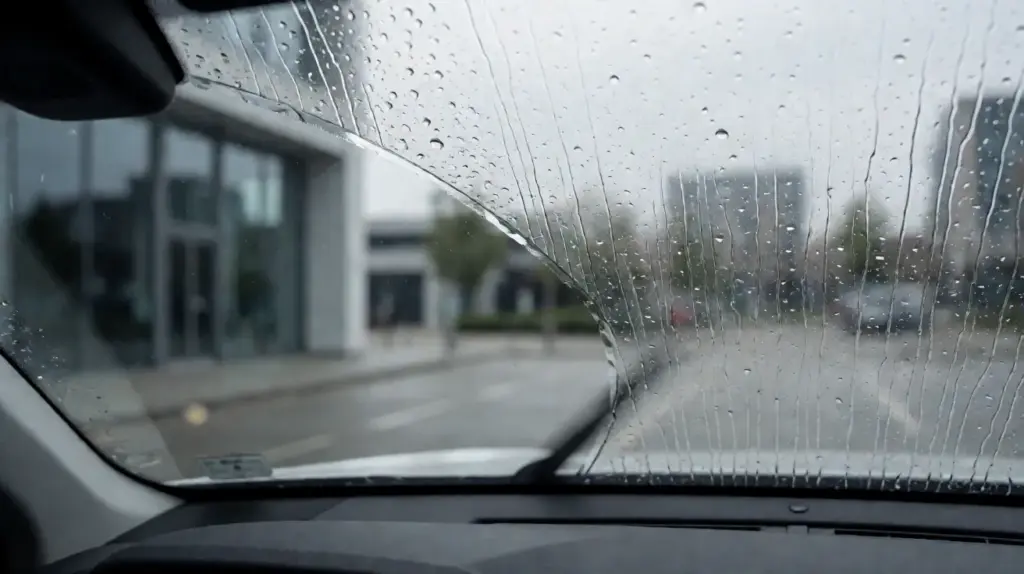
Read the glass before you judge the blade. Park the wipers, wet the screen, run one cycle and look at what the blade leaves behind.
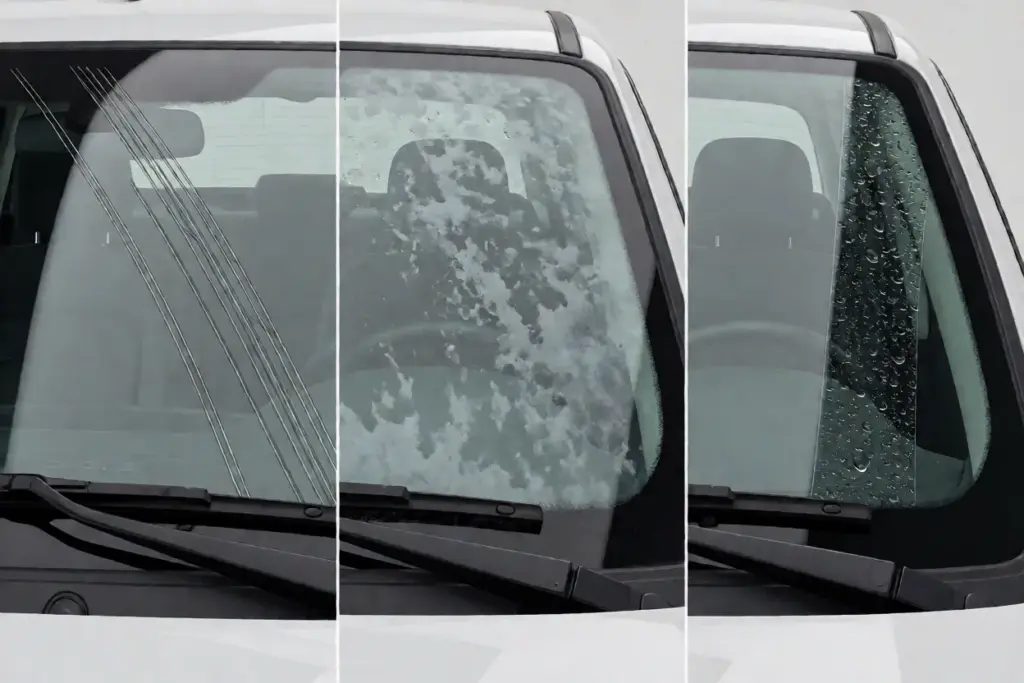
| What you see | Possible cause | First check |
|---|---|---|
| Thin, evenly spaced lines across the sweep | A nick or tear in the element, or grit embedded along the edge | Wipe the element with water and run again; then feel the edge for damage |
| Cloudy film that moves around | Contamination on the glass being spread by the element | Clean the glass properly first; the blade may be innocent |
| A band the blade does not touch | Short blade, wrong position, or the element standing off the glass at one end | Confirm the application and that the blade is fully seated |
| Skips and short smears in the outer arc | Blade lifting at speed, a directional design fitted the wrong way, low arm load | Check fitting direction and whether the arm is the source |
| Only one side of the screen affected | One damaged element, one contaminated area, or one arm with weaker contact | Treat the two positions as two separate cases |
A large missed area deserves more attention than a cosmetic line, because clearing a defined portion of the screen is the job the system is specified to do. The US regulation behind that is set out in FMVSS No. 104, described in the current NHTSA modernisation proposal for the wiping and defrost standards as requiring a power-driven wiping system that clears portions of the windshield at regular intervals. When a customer reports a band the blade does not touch, it is worth handling as a performance complaint and not as a nitpick.
Were the Protective Covers Removed and the Blades Installed Correctly?
Before cleaning anything, confirm what is physically on the blade.
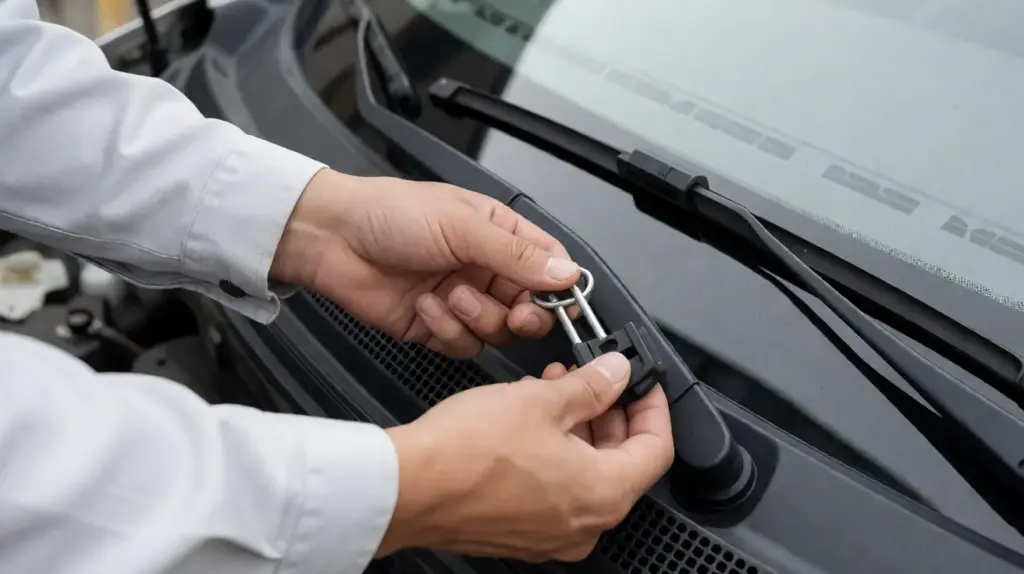
Many beam and hybrid blades ship with a protective strip along the element channel, and some add small end caps or clips that keep the element flat in the box. That strip must come off, and a blade wiped over it will streak exactly as described above. It is also not universal: a fair number of products have nothing to remove, so “check whether your article has one” is the honest instruction rather than implying that every blade arrives with a strip.
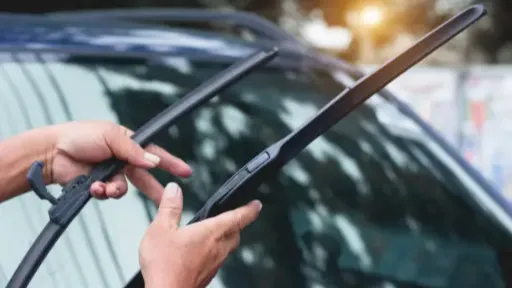
Then look at how it went on:
- Damage during fitting. Pressing the element between thumb and finger, twisting the blade out of packaging, or squeezing a frame to straighten it can leave a gouge or a rolled edge. Gouges show as a repeatable thin line at the same height on every sweep.
- Not fully locked. A blade that is partly seated sits at a slightly different angle to the glass and wipes badly even with perfect rubber. See our troubleshooting for what to check when a blade will not lock into place before you judge wipe quality.
- Fitted the wrong way round. Some designs have a defined orientation, and a spoiler or spring feature intended for one direction of travel will lift or chatter if the blade is reversed.
- Swapped positions. Driver side and passenger side are often different lengths, and a blade moved to the opposite position can run short of where it should.
The mechanical steps, including how to handle the arm and the element while fitting, are in our windshield wiper blade replacement guide.
Is Contamination on the Glass or Wiping Edge Causing Smearing?
This is the most common cause of a “new blade, worse view” complaint, and it is usually a cleaning problem rather than a blade problem.
Glass carries things a windshield does not look dirty: polish and wax overspray, tree sap, insect residue, silicone from a dressing, hard-water film in areas with softening issues, and the oily film that builds up from cabin off-gassing on the inside face of the outer surface. A fresh element picks all of it up and then deposits it as a haze across the sweep. Rain-repellent glass treatments are a special case: coatings change how the blade rides on the surface, and uneven or partly worn coating can produce skip, chatter and uneven wipe with a brand-new blade.
What to do, in this order:
- Wash the screen with car shampoo and rinse well, then inspect it with the glass wet, not dry.
- Treat stubborn film with a dedicated automotive glass cleaner applied with a clean microfibre, working the whole swept area including the outer edges.
- Clean the element with water and a mild detergent. Wipe along the length of the edge with a soft cloth rather than scrubbing across it, then rinse.
- Dry the glass and run a wet wipe test before concluding anything about the blade.
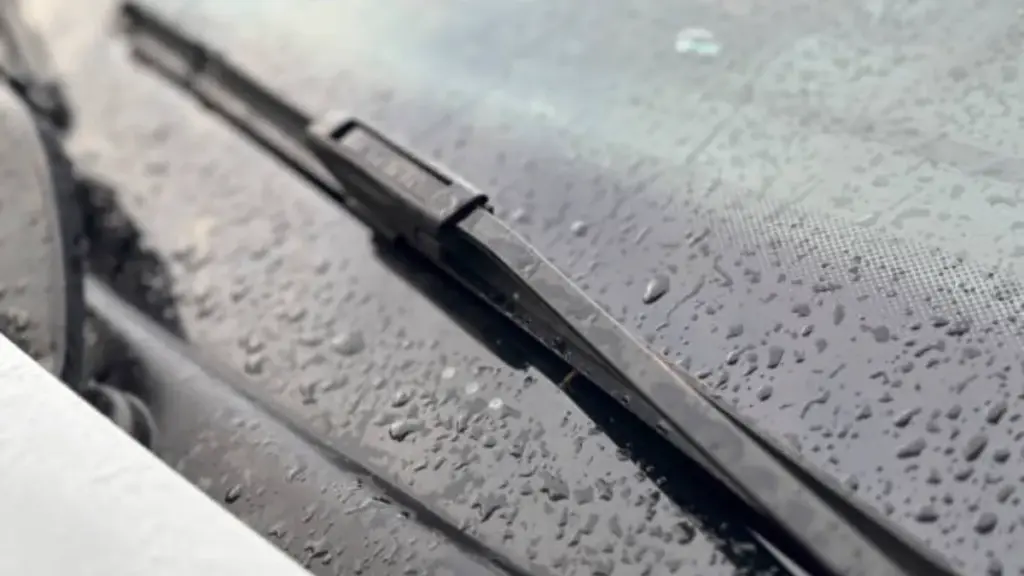
Two things to avoid. Do not put solvent, undiluted alcohol, tar remover or an abrasive pad on the wiping edge: it changes the surface of the element and can leave the blade worse than the contamination you were trying to remove. Do not sand, scrape or “sharpen” an edge that looks uneven. Where the element carries a coating, treatment has to be more conservative, and our comparison of Graphit, Teflon and silicone coated blades explains why the coatings are there in the first place. If the edge is hard and squeaky rather than dirty, that is a different diagnosis, covered under what hardened rubber does to wipe quality.
Does the Replacement Match the Vehicle and Contact the Glass Properly?
Once the blade is clean, correctly fitted and locked, test the two things the blade cannot control: whether it was the right article for that position, and whether the arm is pressing it evenly onto the glass.
- Application: check length, position and arm interface against the vehicle’s own application data rather than against the previous owner’s choice. Unser wiper blade size guide explains what a size chart can and cannot confirm.
- Contact along the edge: with the blade parked, look at where the element meets the glass. Standing off at one end, or an element that follows the curve at one side only, points at a structural issue in the blade or at the arm.
- Arm condition: arm spring load weakens with age and cycles, and an arm that has been knocked or partly bent sits differently at the top and bottom of the sweep. If the arm is the suspect, it should be inspected or replaced by a workshop.

We are not recommending the common shortcut of bending the arm to change pressure. The load and the sweep geometry are set by the arm as built, and bending one to force better contact at one point usually costs contact somewhere else in the arc, plus it risks the pivot and the glass coating. If pressure is the issue, the arm is the part to address.
It is also worth resisting the instinct to answer every streak complaint with a costlier blade. Different constructions wipe differently, and comparing a framed, hybrid and beam blade line is a legitimate conversation when a market really does need a different spec. It is the wrong answer when the real problem was a wax film on the glass.
How Should You Retest, and When Should You Request a Replacement?
Retest under conditions that let the blade do its job, and change one thing at a time so the result means something.
- Flood the screen with washer fluid. A lightly damp or dry screen streaks with any element; this single condition accounts for a surprising share of supposed blade faults.
- Run several full cycles and watch both sweep directions. Some patterns only appear on the return stroke.
- Change one variable per test: clean glass, then cleaned element, then verified fitting, then verified application. Write down what the pattern looked like after each step.
- Compare the two positions. With the same product on driver and passenger sides, one clean and one streaking side is strong evidence about the element or the arm rather than the product family.
- Photograph the result on wet glass with the blades parked, plus a short video of the cycle. This is the evidence a supplier needs.

Where to draw the line: visible damage to the element, a deformed frame, a blade that will not lock with the correct adapter, or the same pattern surviving a clean glass, a cleaned element, verified fitting and a fully wet retest is a product issue to raise as a replacement request. A pattern that follows a coated or contaminated area of glass, or that disappears when the same blade is fitted to another vehicle, is a glass or arm investigation instead, and saying so honestly keeps a claim conversation from going sideways. For the longer list of wear symptoms and what they usually mean, unser windshield wiper blades FAQ covers the general cases; this page stays with blades that streak straight off the box.
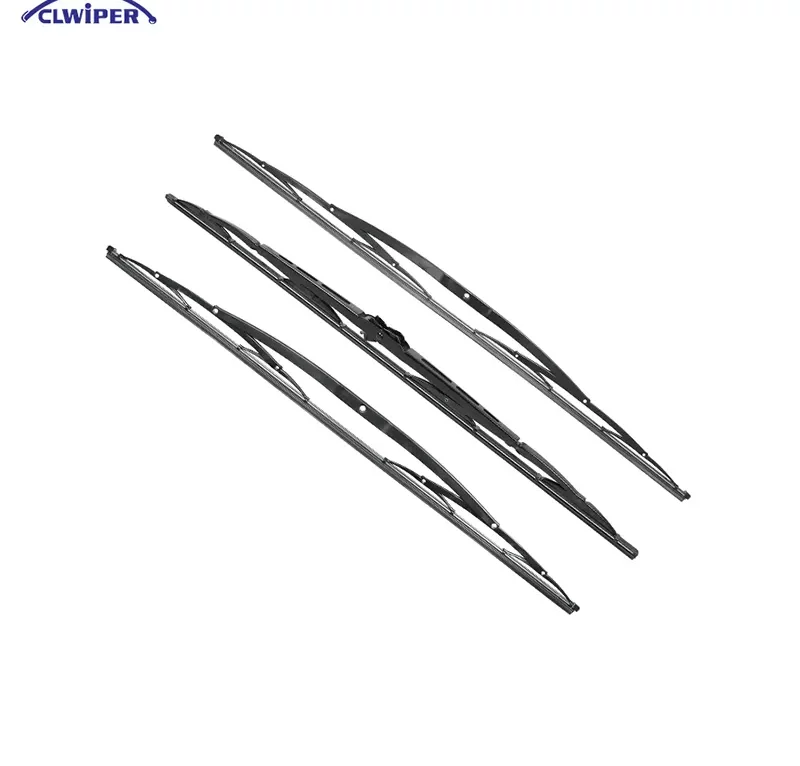
For distributors, the useful discipline is per-lot recording. If several units from the same batch show the same fine-line pattern on clean glass, that is a lot question worth raising with the factory before more stock moves, and the size, adapter set and article code matter in that discussion: for example the CL709 beam blade listing shows the sizes and interface we ship, which is what a factory needs to identify the run.
Send the Model, Photos and a Wipe Video

FAQs About New Wiper Blades Leaving Streaks
Is it normal for new wiper blades to streak a little?
A couple of passes can clear light residue from a new element, especially on a screen that was not cleaned first. Consistent thin lines, haze that spreads, or a band the blade does not touch are not normal, and the first thing to check is whether a protective strip is still fitted.
Do new wiper blades need a break-in period?
Not in the way a tyre or a brake pad does. There is no meaningful wear-in that turns a streaking blade into a clean one. A short settling period is only about light surface residue and the edge finding its contact line, which is why cleaning the glass and running the blade on a fully wet screen is the actual test.
Why does only one side streak?
Because the two positions are separate systems. One element may be nicked, one arm may have weaker load, one side of the glass may carry more contamination, or one blade may be a different length spec than assumed. Treat them as two cases: compare the pattern, then swap nothing until you have a photo of each.
Can a rain-repellent glass coating cause streaks?
It can affect how a blade rides on the glass, and an uneven or partly worn coating is a known source of skipping, chatter and uneven wipe. If a coating is present, check the coating maker’s guidance on wiper compatibility before blaming the blade, and note whether the pattern follows the coated area.
I cleaned the glass and the blades and it still streaks. What now?
Work down the list once more with the screen fully wet: protective strip removed, blade locked and facing the right way, application confirmed for that position, element inspected for nicks. If the pattern survives all of that, raise it as a replacement request with photos and a short wipe video. If the pattern disappears on another vehicle or another area of glass, investigate the arm and the windshield instead of replacing the blade again.