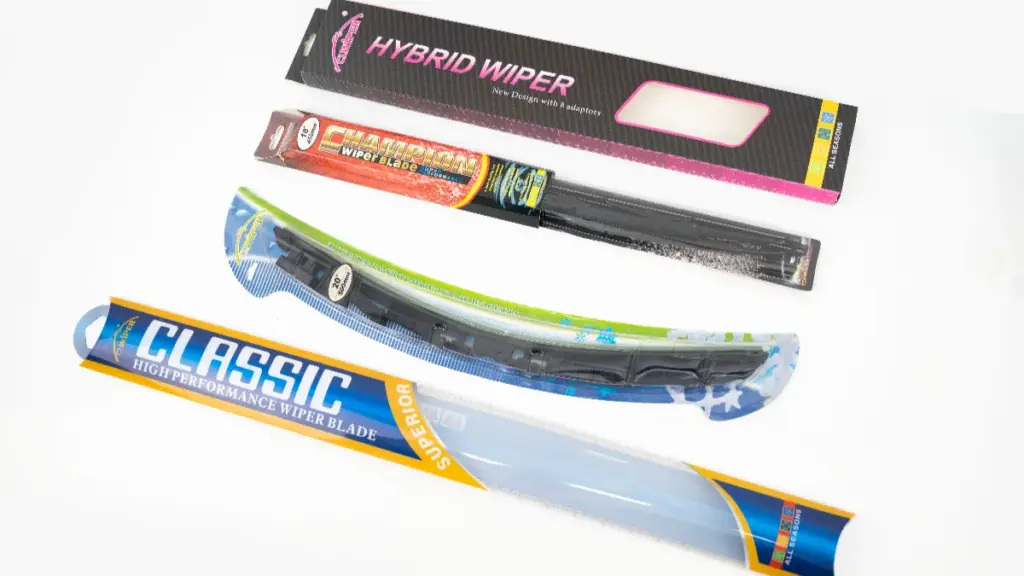
A kit of adapters proves what can be clipped, not what belongs on the vehicle in front of you. Those are different claims, and a fitment check is the step that separates them. The useful output is not a longer adapter list; it is a record that ties one vehicle application to one SKU, one adapter, one position, and one named source of evidence, with a date on it.
Multi-adapter blades are sold on breadth, and breadth is exactly what makes verification easy to skip. This page covers why a larger adapter count does not reduce the checking work, what information a buyer has to supply before an application can be assessed at all, how the arm end, adapter and blade are matched as three separate parts, what still has to be confirmed once the connection is right, and how verified and unverified applications should be written down so the next order does not start over.
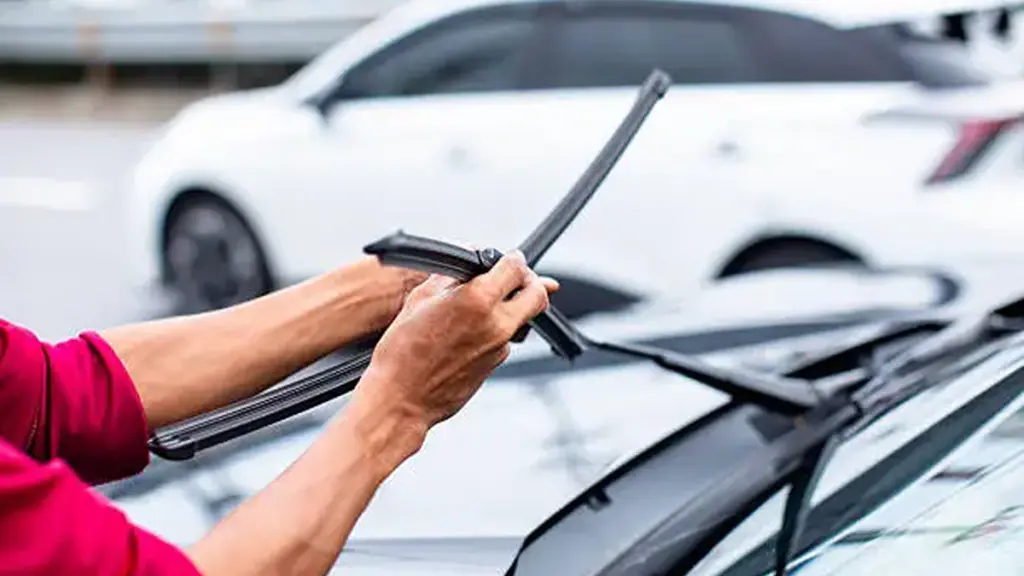
Why Does a Multi-Adapter Kit Still Need a Vehicle Fitment Check?
Because three different statements get read as one. Take the wording our own catalogue uses, since it is the clearest example of the gap:
- A count of parts. Itu CL908 page lists 19 adaptor; itu CL800-B snow blade lists 10. That is a physical inventory fact, and it is checkable by opening the box.
- A coverage claim. The same pages state that the blade can fit 99 per cent of wiper arms in the market, atau 98 per cent of cars. That is a statement about how common the arm types are, not about your vehicle.
- An application record. Make, model, bertahun-tahun, gaya tubuh, pasar, position, and the SKU confirmed for that combination. This is the only one of the three that answers a buyer’s question, and it is the one most listings do not carry.
A “for 95 per cent of cars” line can be entirely true about connector prevalence and still be wrong for a specific car, because the missing 5 per cent is not spread evenly: it concentrates in the newer, odder and region-specific ends of the market, which are precisely the applications a distributor gets asked to quote. Coverage percentages describe the arm population. Fitment describes one vehicle.
Nothing here argues against wide-range kits. They are the practical answer to a fragmented aftermarket, and planning which ones to carry is a real exercise in its own right, which our page on SKU coverage planning deals with directly. The point is narrower: an adapter count is a starting hypothesis, and the fitment check is what turns it into something you can quote.
What Vehicle Information Should Buyers Provide?
Six fields, and the list is in order of how much each one costs you when it is missing.
Brand and model line. The obvious pair, and the least sufficient on its own. A model name covers several toolings.
Model years, with the split. Not the year of purchase. Generational boundaries move within a nameplate, and the windscreen, the arm and the sweep can all change across one.
Body style. Sedan, mobil tertutup berpintu dua, wagon, hatch, SUV. Kita Civic size reference is a worked illustration of why this field exists: the same nameplate carries 26 Dan 18 inches on one generation of the car, 26 Dan 22 on an earlier sedan, 28 Dan 24 on the coupe from the same span, Dan 21 Dan 19 on the generation before that.
Market and region of sale. Decides which tooling and which arm hardware the car was built with, and therefore whether an application list written for another region can be used at all.
Position. Driver, penumpang, belakang. Each is a separate line in the record, and a quote that covers one does not cover the others.
Arm end, with a photograph. The old blade off, the joint in daylight, one straight-on and one angled shot. This is the field that settles most disputes, and it is the one most often skipped.
Where the vehicle itself has to be pinned down beyond a nameplate, the registration document carries the durable answer. In the United States the vehicle identification number is a defined 17-character string, it carries a check digit at position nine, and no two vehicles manufactured within a 60-year period beginning with the 1980 model year may share one (49 CFR 565.13). Recording the VIN, or the plate-linked registration details in your market, beats recording a trim name that a listing may not recognise.
What missing fields cost you in practice: no year split means the wrong generation; no body style means the coupe figure applied to a sedan; no market means a mirrored assumption from a region with different hardware; no position means the pair is quoted as if it were one number; no photo means the adapter is guessed until the first customer reports that it will not close, at which point the conversation becomes a fault investigation rather than a quotation. The step-by-step check for a blade that refuses to lock is written up separately in the fitment problems article, and it ends by asking for the same fields listed above.
How Do You Match the Arm End, Adapter and Blade?
As a chain of three, not as one decision. Each link has its own evidence.
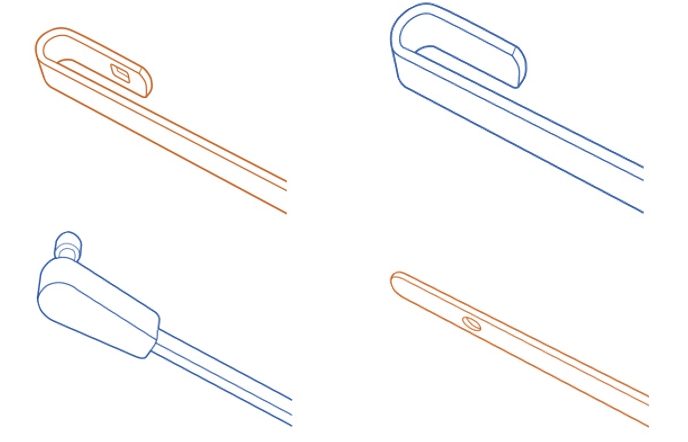
Link 1: the arm end. Whatever is on the car. Its family, Ya, but also the wire diameter, the depth of the hook or pin, the width across the top and whether a closing piece is still present and intact. Catalogue naming is not reliable here: the same word describes parts that differ in the dimensions that matter. The shapes themselves are described in our connection types guide, so they are not repeated here; what matters for fitment is that you have measured or photographed the one on this vehicle.
Link 2: the adapter. Matched to link 1 by number and by dimension, not by which product family it came from. Record the number printed on the adapter or listed in the pack contents, and confirm it against the supplier’s adapter drawing rather than against a photo of a blade on a website. Adapters that belong to a different SKU can look identical in a thumbnail.
Link 3: the blade. The body that carries the refill, chosen for length, position and the arm’s downforce. A blade that clips on and is the wrong length has passed link 1 and failed the application, which is why these three should not be collapsed into “the connector fits”.
Sort by the joint, then the number, then the size. Sorting by brand, or by which product line a customer happened to buy last, is how a catalogue accumulates entries that cannot be defended.

What Must Be Checked Beyond the Connection?
Five things the paperwork cannot show, because they are properties of the glass and the movement rather than of the part.
- Length against the useful area. Whether the arc ends where the application expects, short of the bond line and clear of the cowl, the A-pillar trim and the mirror pocket.
- Mounting height and the relationship between the two blades. A blade seated at a different height can meet its partner at the crossover, or run under the spoiler lip. Both show up only in travel.
- Clearance through the full sweep. Checked with the glass wet and the wipers cycling, not with the arm parked.
- Glass contact along the whole element. Tip lift at one end of the arc is a contact problem, and it is commonly misread as a quality problem on a brand-new part.
- Direction behaviour, where the design has one. If the profile or the pre-curve is asymmetric, the mounting orientation belongs in the check. Where our published data does not state a direction for a SKU, we treat that as an open question on that SKU rather than something the adapter choice settles.
It is worth naming the distinction the list above rests on. A document check confirms that the part is eligible for the application according to a stated source. A vehicle check confirms that it wipes. The first is what lets you quote; the second is what lets you promise. For the length reasoning specifically, see whether a different blade length can be substituted, and for the drive-side reasoning see left-hand versus right-hand drive applications.
How Should Verified and Unverified Applications Be Recorded?
In one table, with a status column that admits what has not been checked. The columns below are the record we quote from; a blank cell is more useful than an assumed one, because it tells the next person what is still open.
| Column | What goes in it | What counts as the entry being finished |
|---|---|---|
| Vehicle application | Merek, model line, year split, gaya tubuh, pasar | All five named; a VIN or registration reference where the vehicle is a real one rather than a row in a range |
| Position | Driver, passenger or rear, one row per position | No row carries two positions |
| SKU and size | Model code plus the length specified for that position | The size is tied to the position, not to the product family |
| Adaptor | Adapter number from the pack contents or drawing | Number and arm-end photo agree |
| Basis of the claim | Which source supports the row: supplier application data, original-equipment part reference, a measured old unit, or a vehicle trial | A named source, not “universal” and not a coverage percentage |
| Verification status | Documented, bench-checked, vehicle-checked, or unverified | Unverified rows stay quotable only as such, and are not quoted as confirmed |
| Version and date | Which revision of the record this is, and when it was set | Any change to the SKU, adapter set or artwork re-opens the rows that touched it |
Three habits make the table work. Keep unverified rows visible rather than deleting them, because a blank market is information you will otherwise re-learn through a return. Date every revision, because an adapter set changes without announcing itself. And when a row is promoted from documented to vehicle-checked, attach the evidence that moved it: the wet-glass run, the photographs, the notes. The recording discipline on the test side is the subject of our sample testing page.
Send the Application List, Get the Record Back

FAQs About Multi-Adapter Wiper Fitment
Does more adapters mean wider coverage?
More adapter shapes reach more arm families, which is real. It does not extend to vehicles, because coverage of an application also needs the length, position and travel clearance. A 19-adapter kit that lacks the figure for one body style is not covered for that car, and the box will not tell you so.
Is a matching connection enough to confirm fitment?
It confirms one link in a three-part chain. The joint tells you the part can be attached. Length for that position, the sweep relationship between the two blades, and clearance at the edges of the glass are what tell you it will work, and none of them are visible in a connector photo.
Can a photo replace the rest of the verification?
TIDAK, but it removes most of the guesswork. A clean arm-end photo settles the joint and usually the adapter number, which is half the argument. It says nothing about length, travel or contact, so the photo belongs in the record as evidence for one column rather than as the whole answer.
How do you record a vehicle that has not been verified?
Keep the row and mark it unverified, with whatever partial basis exists: the arm family it resembles, the size that would apply, the reason it is still open. A visible unverified row is a to-do. A deleted one becomes a confident wrong answer repeated by the next person who uses the list.
Do product changes mean the applications must be re-checked?
The rows that touched the changed element do. A new adapter set, a revised clip housing, a changed refill profile or a re-numbered SKU invalidates exactly the applications that depended on it, and versioning the record is what tells you which those were. Rows verified against an unchanged blade and unchanged adapter carry over; an unversioned list cannot make that distinction, which is why every revision needs a date.