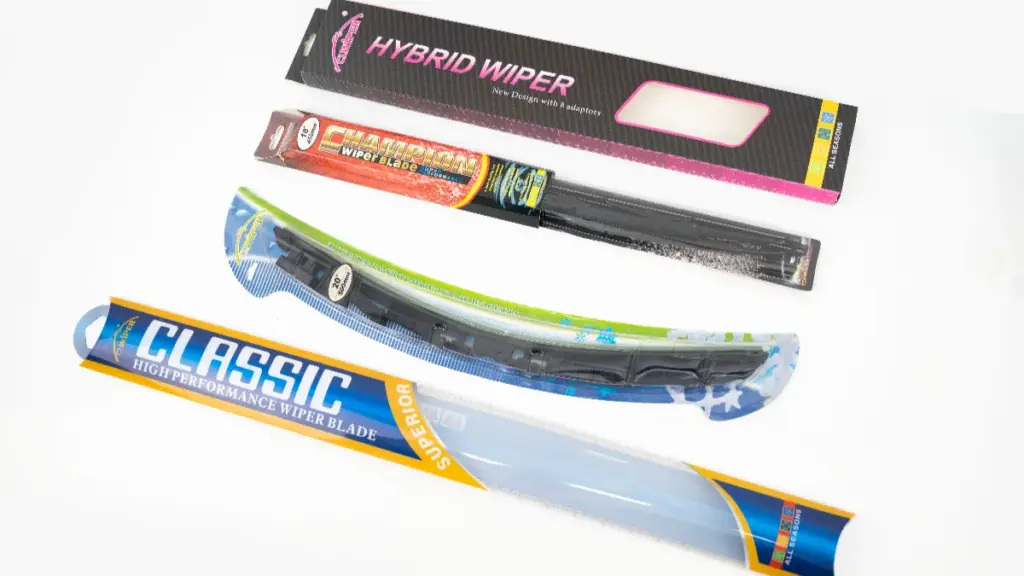
A refill is the right choice when three things are true at the same time: the blade was designed so the wiping element can be replaced, the frame or spine that holds it is still straight and undamaged, and you can obtain an element that matches that profile. If any one of the three fails, you are buying a labour step that the assembly no longer supports, and a complete blade is the practical replacement.
This article covers what a refill actually replaces, when keeping the existing structure makes sense, when the structure itself is the problem, how the two options compare on cost, effort and parts availability, and what to confirm before ordering either one. Measuring an element and identifying its profile is a separate procedure with its own steps, so it is summarised here and covered in detail in the guide linked below.
What Is the Difference Between a Refill and a Complete Blade?

Every wiper blade is built from three layers of function, and the three layers wear at different rates.
- The wiping element. The rubber or silicone strip that actually contacts the glass. This is the part that dries out, chips, splits at the edges and loses its sharp wiping line. It is also the part the trade sells separately as a refill.
- The structure that holds it. Steel rails and tension springs in a conventional frame blade, a curved spring steel strip and adapter housing in a beam blade, or a moulded spine in a hybrid. The structure decides how evenly pressure is spread along the edge and how the blade follows the curvature of the glass.
- The connector. The adapter, خطاف, pin or bayonet interface that grips the wiper arm. Damage here shows up as a blade that slides or rattles on the arm rather than a blade that wipes badly.
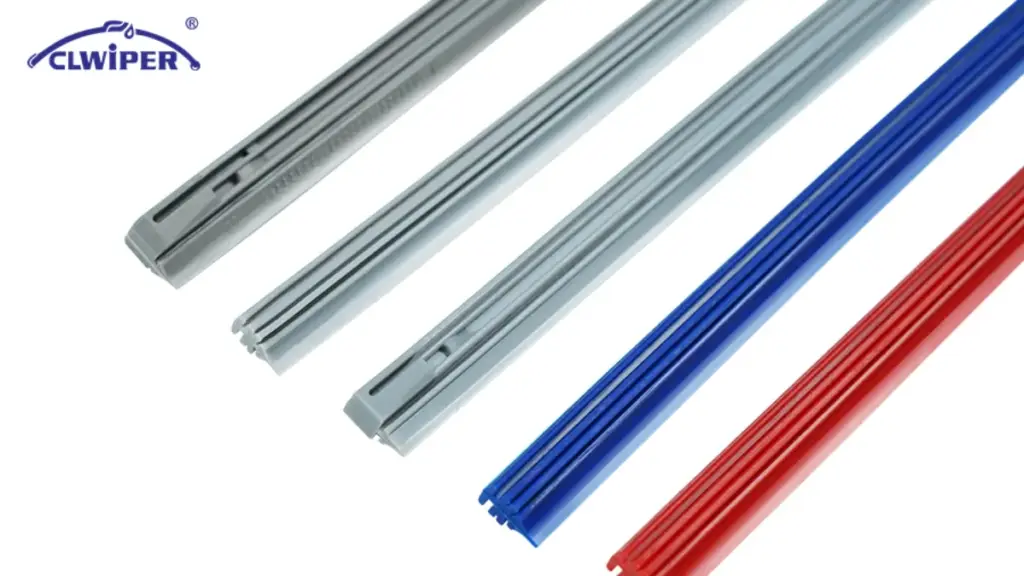
A refill covers the first layer only. The naming in a supplier’s refill range usually reflects that: the profile families sold as separate strips (rubber refills in NR, KR and ZR profiles, silicone refills built on a PC strip, and coated refills) are matched to the channel they clip into, not to a car model. A complete blade covers all three layers at once, which is why the same wiper type can be sold both ways: a beam blade such as the CLWIPER CL709 lists a natural rubber refill element as a feature of its spring steel beam body, so the element and the assembly are separately sourced parts of one product.

The commercial consequences differ from the mechanical ones. For a distributor, a refill is a consumable that reuses the customer’s existing hardware; a complete blade is a replacement unit that carries its own connector and its own adapter assumptions. The component relationship is explained in our breakdown of what a windshield wiper is made of.
When Is Replacing Only the Refill a Practical Option?
When the design, the condition of the structure and the availability of a matching element line up. Treat the three as separate checks, because passing one tells you nothing about the others.
Check 1: was this blade built to be re-elemented? Conventional frame blades are the clearest case; the rubber strip is clipped under steel rails and tension springs, and replacing it is a normal service step. Some beam designs accept a replaceable element too, and others are co-extruded or bonded so that removing the element destroys the fit. Product pages and catalogue data usually state which construction you have; ملكنا conventional blade range is described in exactly those rail-and-squeegee terms.
Check 2: is the structure still sound? The rails must hold the new strip with the same clamping force they had originally, the tension springs must still push, and the end caps and connectors must be present. Steel that has started to corrode at the rail seam, or a frame that has been bent and straightened, will hold a fresh element at the wrong pressure. New rubber in a tired frame often wipes worse than the old rubber did the first week it was fitted.
Check 3: can you actually source the matching element? This is where most refill decisions fail in practice. Refills are matched by cross-section profile, body width, lip width, total height and the retention method, and length alone does not identify one. Do not judge replaceability by whether the old strip came out. Plenty of elements can be torn out of a blade that was not designed to release them, and a strip that pulls free is not evidence that a matched replacement exists. If you have already removed the element, measure it before ordering; the sequence, the tools and the fields to send a manufacturer are set out in our guide to measuring wiper blade refills, profiles and rails.
A fourth condition is worth naming because it belongs to buyers rather than to blades: refill programmes make sense in fleet and service-channel settings where the labour is available and the same profile repeats across vehicles. On mixed retail fleets, the matching work usually costs more than the part saves. Truck and bus blades are the same three-layer component type as a car blade, which is why commercial-vehicle buying decisions start from the element and rail condition; see the bus and truck blade buying guide.
When Is Replacing the Complete Blade the Better Choice?
Replace the assembly when the fault is not in the element. The table below is the working version of that rule: read down the first column with the blade in your hand, then check the third column before you order.
| Condition found on the old blade | Practical replacement form | What still needs confirming |
|---|---|---|
| Element hardened, chipped or split; rails and springs intact | Refill, if the design supports it | Profile family, width and height, retention method, length |
| Frame bent, rails corroded at the seam, tension spring relaxed | Complete blade | Arm connector type and size for the position |
| Adapter cracked, missing end caps, blade moves on the arm | Complete blade | Whether the arm end itself is damaged |
| Beam element torn out of a bonded or co-extruded body | Complete blade | Whether a matched element is offered at all |
| Streaking survives a wash of glass and edge | Complete blade | Arm pressure and blade length for the position |
The last two rows deserve a word of caution. A blade that still streaks after both the glass and the element have been cleaned is telling you about contact or pressure, and a fresh strip will inherit that problem. A bent arm, a worn pivot or a wrong length is not fixed by either purchase, so read the installation and performance checks in our wiper replacement guide before blaming the part. If the arm needs assessment, that is a job for a workshop rather than a DIY adjustment.
It is also worth noticing what a vehicle inspection records. Under the UK MOT inspection manual’s visibility section, a wiper blade that is defective is one defect, while a blade that is missing or obviously not clearing the windscreen is treated as the more serious one (MOT inspection manual, section 3 Visibility). The inspecting standard is the result on the glass, not which line item you bought. That is the honest way to frame the refill question: if a matched element restores a clean sweep and the structure is sound, the outcome is the same, and if the structure cannot hold an edge against the glass, no new strip will make it pass.
How Do Cost, Installation Effort and Parts Availability Compare?
The comparison below is deliberately about the shape of the cost, not about percentages. Anyone quoting a fixed saving ratio is describing their own price list, not your market, and the parts side of this decision moves with what your supplier stocks.
| البعد | Refill only | Complete blade |
|---|---|---|
| Unit cost basis | Element only; the structure is already paid for | Element, structure and connector in one unit |
| Labour and skill | Highest: threading rails, preserving spring position, cutting to length | Lowest: clip on, remove old, no reuse of worn hardware |
| Matching difficulty | حساب تعريفي, width, height and retention all have to match | Connector type and length for the position |
| Parts availability | Narrower: refill profiles are a subset of what is fitted on cars | Broader: coverage is planned by application, not by rail profile |
| Failure mode if wrong | Element works loose, or pressures the glass unevenly | Wrong connector or length; the blade simply does not fit or reach |
| Where the cost sits | In labour and in the matching step | In the part itself |
Two patterns come out of that table reliably. First, refills reward repeat work: the same profile across a defined fleet, a fitter who knows the rails, and stock on hand. Second, complete blades reward variety: when the vehicles differ, the labour is being paid once, and the connector has to be right on the first attempt. Replacement intervals are a separate question, but they interact with this choice, because a service that is already scheduled makes a refill programme easier to justify; see how often wiper blades should be changed.
What Should You Confirm Before Buying Either Option?
There are two ordering paths, and each has a short list of fields that decide whether the part fits.
Path A, عبوات. Confirm the profile family the channel accepts, the body width and lip width, the total height, the retention method (rails, clip-in, scored length adjustment), and the length you need, plus the compound and any coating. Summarised like that, the list is short; measured properly it is a workshop procedure, and the reason a refill can look interchangeable by length and still fail in the rail is exactly why the measurement steps matter. The full sequence is in the refill measurement guide, and the refill range itself is listed under wiper blade refills.
Path B, complete blades. Confirm the arm end and connector, the length for each position, whether the vehicle uses different lengths on driver and passenger sides, the blade type you want for the climate, and the packaging you need if you are reselling. ملكنا guide to choosing blade type covers the construction choice; the connector question belongs to the wiper blade connection types page rather than to this article.
Send the same evidence either way. Photograph the old blade flat and in profile, photograph the arm end where it meets the blade, keep any end caps or adapters you removed, and write down the vehicle, the position and the length marked on the old part. For a refill enquiry, include a short piece of the removed element so the cross-section can be seen; for a complete-blade enquiry, include the adapter or arm photo instead. If you are unsure which of the two paths you are on, that evidence is what settles it, and you can send it through our contact page for a fitment check before ordering.
Common Mistakes Buyers Make When Choosing Between Refills and Complete Blades
A few recurring mistakes turn a straightforward replacement into a fitment problem.
Ordering a refill by length alone. Two elements can share a length yet differ in body width, total height, profile family and retention method, and any one of them makes the strip sit wrong in the rail.
Assuming a silicone refill fits a channel that held rubber. The two compounds behave differently under UV and heat, and the channel was built for one cross-section; swapping compound without re-checking the profile is how a “better” element wipes worse.
Reusing a frame that has been bent or straightened. It holds the new element at the wrong pressure, so the blade skips and streaks and the refill is blamed.
Forgetting that a complete blade reopens the connector question. A refill reuses the existing arm and adapter; a full blade needs the arm end, adapter and per-position length confirmed again, and the driver and passenger sides are not always the same.
Refill or Full Blade for Your Line?
FAQs About Refills and Complete Wiper Blades
Can every wiper blade have its rubber replaced?
لا. Refill replacement depends on the construction. Frame blades with rubber clipped under steel rails are the straightforward case, some beam bodies accept a replaceable element, and others are bonded or co-extruded so the element is not a serviceable part. Check the product’s own construction data instead of assuming from the fact that the old strip could be pulled out.
Can I reuse the old rails and adapters with a new refill?
Only when they are still doing their job. Inspect the rails for corrosion at the seam, check that the tension springs still press, and confirm the end caps and connector are intact. Reused hardware that has loosened will hold a new element at the wrong angle, and the blade will look like the new refill failed.
Is a refill the cheaper option in every case?
Not as a rule. The part is cheaper than an assembly, but the matching step and the labour are real costs, and a wrong profile ends with an assembly purchase anyway. Where the same profile repeats across a fleet and the fitting labour is already paid for, refills usually make sense. Where vehicles vary and the work happens once, a complete blade is often the lower total cost.
The frame is bent. Can I fit a new refill to it?
لا, replace the blade. The frame sets how the edge meets the curvature of the glass. Once it is deformed, the new element is held at a pressure pattern it was not designed for, so it will skip and streak, wear unevenly and get blamed for a fault that is in the structure.
If the length matches, is the refill interchangeable?
Length is one field out of several. Body width, lip width, total height, the profile family and the retention method all have to match the channel, which is why refills are sold by profile rather than by car model. Measure the removed element against those fields before treating two refills as the same part.