What Are Bus and Truck Wiper Blades?
Bus and truck wiper blades are wiping systems sized and reinforced for the larger, flatter, and more vibration-intensive windshields found on commercial vehicles. Compared with many passenger-car applications, they may use longer blades, but the required length varies by vehicle model, windshield geometry, and arm configuration; they also experience higher aerodynamic loading at sustained highway speed and must maintain consistent glass contact across a wider sweep arc.
A commercial vehicle windshield is rarely a single curved piece of glass. Tractor-trailer cabs typically have a split-windshield design: two tall, relatively flat panes with a center post. Buses and coaches may have a single, wide panoramic pane. Each configuration creates a different sweep geometry, blade length requirement, and arm mounting position.
This guide is written for B2B buyers — fleet-parts distributors, vehicle-remarketing firms, and OEM procurement teams — who need to specify the correct blade for a known arm and windshield combination, source at wholesale volume, and avoid the most common cross-brand fitment mistakes.
What Extra Factors Should Buyers Confirm for Commercial Vehicles?
At the fundamental level, a truck blade is the same component type as any other: a wiping element (a natural-rubber or silicone refill, depending on the model), a structural spine or frame, and a connector. Rather than assuming a commercial blade differs in any fixed way, treat the following as factors to confirm against the specific vehicle and application.
| Factor | What to confirm for commercial use |
|---|---|
| Blade length | Confirm against the vehicle’s windshield geometry, arm reach, and sweep pattern — do not assume a single “truck size” applies. |
| Arm load / downforce | Confirm the arm’s pressure profile; it influences edge contact, noise, and element wear, and varies by vehicle and arm design. |
| Construction type | Confirm framed, beam, or hybrid against the actual arm and speed profile; passenger-style and heavy-duty options can overlap. |
| Operating speed | Confirm whether sustained highway speed introduces aerodynamic lift, which affects construction and pressure choice. |
| Vibration and shock | Confirm connector retention against loosening from road, engine, and axle inputs over long duty cycles. |
| Climate and corrosion | Confirm frame and adapter material and coating against the operating region (road salt, dust, UV, cold soak). |
For a general passenger replacement overview, see our replacement guide. The remainder of this article assumes a commercial-vehicle context.
How Do You Choose the Correct Blade Length?
Unlike passenger vehicles, where a quick size lookup often resolves the question, commercial-vehicle blade lengths are tied to the specific windshield geometry and arm configuration of the vehicle model. Two trucks of the same model year can use different lengths because their windshields and sweep arcs differ.
Starting point
If you are sourcing a replacement for a known fleet vehicle or an aftermarket SKU list:
- Note the OEM part number or the blade length marked on the existing blade (if present).
- Measure the blade itself from one end to the other, excluding the wiper arm. If end caps or projecting adapters affect the reference dimension, state exactly which points were measured.
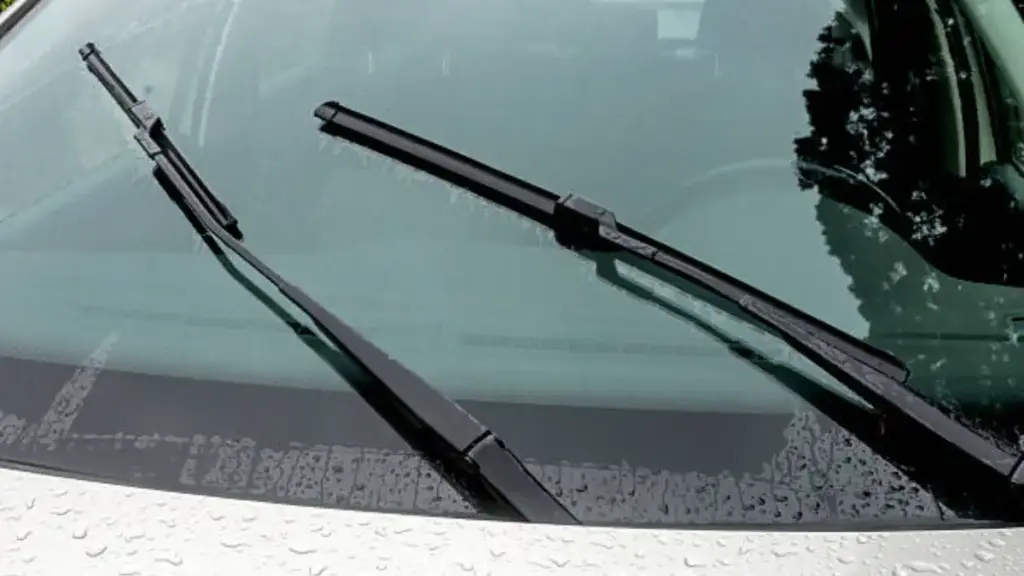
- Confirm the sweep pattern: tandem (both arms sweep in the same direction), opposed (arms sweep outward from center), or single (one arm, bus-style).
For most truck cabs, driver-side and passenger-side lengths differ. Buses with a single central arm and a panoramic windshield may require a longer blade with a specific curvature to maintain glass contact at both ends of the sweep arc. Our general sizing guide covers the passenger side in more detail: what size wiper blades do I need.
What to avoid
- Do not assume “longer is better.” A blade that extends past the windshield edge can contact the rubber seal and bounce off the glass under arm load.
- Do not substitute across different arm geometries (center-post vs. cantilever) without verifying the sweep arc and clearance.
How Do Connector and Adapter Types Work?
The connector is the interface between the wiper arm and the blade. In the commercial vehicle aftermarket, connector inconsistency can be a major source of wrong-part orders, even when the blade length is correct.
Major connector families
- U-hook (J-hook): A metal hook at the arm end; the blade has a matching slot. Common on light trucks and some older buses. Retention may be a plastic clip or metal spring.
- Side-pin / top-pin (button): A round or rectangular pin on the arm engages with a matching opening or adapter on the blade. The pin dimensions and entry orientation must be confirmed before ordering.
- Flat-blade / direct-fit: The blade body integrates a clamp that slides over a flat arm end. More common in passenger vehicles; some light commercial vehicles use a scaled-up version.
- OEM-specific proprietary connectors: Some truck and bus OEMs use a unique adapter shape or bolt-on flange that is not cross-compatible. Confirm the adapter drawing or sample before bulk ordering.
For a full overview of connector types across all applications, see our types of wiper blade connections article.
B2B note: If you are stocking a SKU list for a mixed fleet, you will likely need several adapter variants per blade length to cover the connector spread. Specify the adapter separately or as an included accessory so the factory can pre-fit or pack them correctly.
What Construction Works Best for Heavy-Duty Use?
Construction is a trade-off, not a ranking: the right choice depends on the arm, the windshield, and how the vehicle is driven. The three common patterns behave as follows.
Framed (conventional) construction
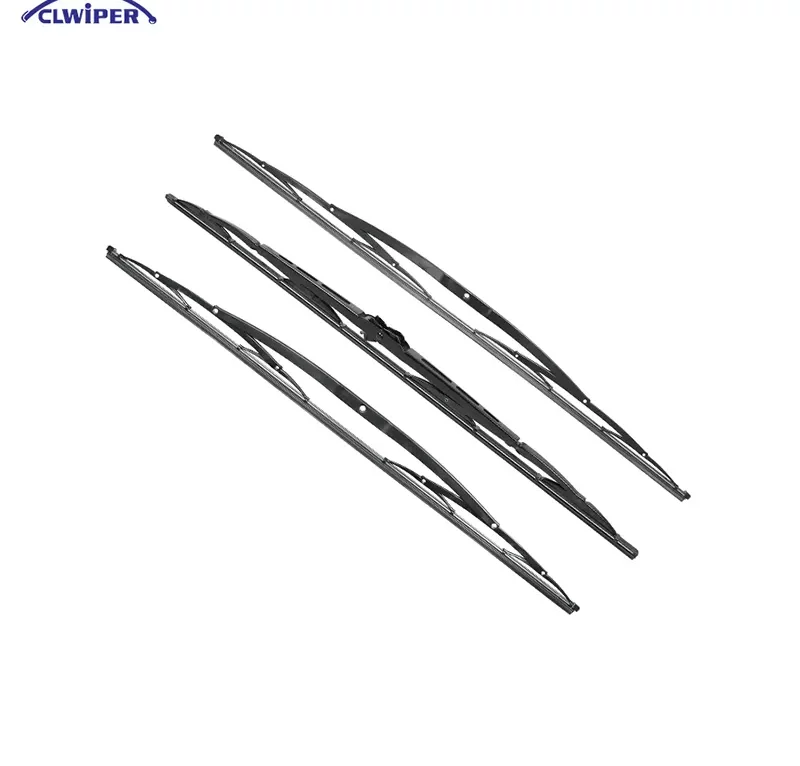
A metal frame with multiple pressure points and a rubber element clipped into it. It is common in heavy-duty use because:
- Multiple contact points can help maintain edge pressure on large, flat windshields, often with less spring tension than a single-tension beam requires.
- A rigid frame can help resist aerodynamic lift at sustained highway speed.
- Worn rubber can be replaced in some designs without changing the entire frame (see the refill sizing guide).
Trade-off: a larger exposed frame can mean more wind noise and slightly higher drag.
Beam (frameless) construction
A single spring-steel or synthetic spine wrapped in rubber, with no external frame. It appears in some long-haul applications for quieter operation and lower wind resistance:
- Pressure can be distributed more evenly through an integrated spring steel — with fewer discrete contact points.
- A lower profile can reduce lift at highway speed.
- With no exposed frame members, road-salt accumulation and corrosion may be reduced over time.
Trade-off: it relies on the arm to supply the correct downforce across the full arc; an incompatible arm on a long blade may cause under-pressure in the middle section. See our hybrid vs. beam comparison for the underlying mechanics.
Hybrid
A beam blade enclosed in a cosmetic and aerodynamic shell. It is less common in heavy-duty but appears on some premium buses and newer cab-over trucks where aesthetics and noise reduction are prioritized.
Element material
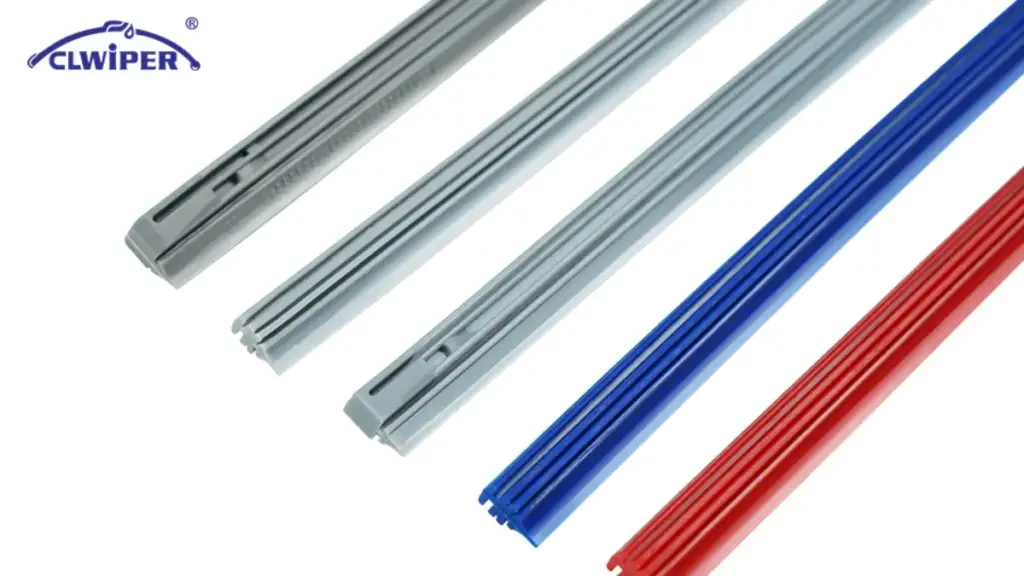
CLWIPER’s bus and truck category lists both natural-rubber and silicone refill options. Rubber is common for commercial blades, and buyers may request silicone refill options for specific climate or performance requirements, but the exact material construction and supporting test data should be confirmed before ordering. “Silicone” can refer to either a solid silicone element or a silicone-containing coating, and a product listing may not specify which — confirm the exact construction before ordering. See our silicone vs. rubber comparison.
What Should B2B Buyers Specify When Sourcing?
A complete bus or truck wiper blade specification should cover the following. Incomplete specifications can lead to avoidable fitment problems and sample revisions.
| Specification | Why it matters | What to supply |
|---|---|---|
| Blade length | Determines fit to the sweep arc; must match the arm and windshield geometry | OEM part number, blade length measured without the arm, or a reference drawing |
| Connector type and dimensions | Governs whether the blade physically attaches to the arm | Connector type name, arm-end photo with a ruler, or sample |
| Construction (framed / beam / hybrid) | Affects pressure distribution, noise, aerodynamic lift, and cost | Target vehicle model and speed profile, or a sample of the current blade |
| Element material and cross-section | Affects wiping quality, noise, and service life; cross-section affects refill compatibility if refillable | Material type; cross-section photo or profile drawing if refillable |
| Cold-weather and UV resistance | Element and frame coating degrade differently under sustained UV and temperature extremes | Operating region or the test standard required (e.g., low-temperature brittleness) |
| Corrosion protection (frame/adapter) | Road salt and wash chemicals can accelerate frame rust; matters for fleet service life | Frame material (stainless / plated steel / composite) and coating spec |
| Quantity and packaging | Affects freight cost per unit and warehouse handling | Units per inner box, units per master carton, pallet configuration |
| Private-label and branding | Logo, packaging, and labeling are part of the product spec for distributors | Logo artwork, barcode/label requirements, packaging design files |
| Sample and lead-time expectations | Affects program timeline | Required pre-shipment sample count and target delivery window |
CLWIPER’s commercial line includes the CL708 truck/bus model; confirm exact lengths, connector options, and construction against your target arm and windshield. CLWIPER’s published wholesale program covers OEM/ODM orders, up to 3 free samples (1–3 day dispatch), adaptable MOQs (about 500–5,000 units), laser-engraved logo and custom packaging, with production in Dongguan, Guangdong. See the bus & truck wiper blade category or contact CLWIPER for a quote.
How Do Standards and Maintenance Affect Fleet Sourcing?
In the United States, FMVSS No. 104 (49 CFR 571.104) applies to windshield wiping and washing systems on passenger cars, multipurpose passenger vehicles, trucks, and buses. It establishes system-level requirements, including wiping speeds. However, the detailed minimum wiped-area percentages in the standard are specified for passenger cars, so they should not be presented as aftermarket blade-size requirements for every truck or bus.
In day-to-day fleet operation, wiper condition is a visible pre-trip and periodic-inspection item, so procurement teams typically set replacement intervals that keep the driver’s view zone fully serviced rather than waiting for a wipe to visibly fail. For general replacement timing, see our replacement guide.
Frequently Asked Questions
What size are truck wiper blades?
There is no single standard size for truck or bus wiper blades. Confirm the required length using the vehicle model, OEM part number, existing blade, or approved fitment data. Driver-side and passenger-side lengths can differ on the same vehicle.
Can I use a passenger-size beam blade on a light truck?
The blade must match the arm’s downforce profile and the windshield’s sweep arc. A shorter or softer blade on a heavy-duty arm can chatter, skip, or lift at speed; a longer one can contact the glass seal. If you are considering this cross-application, send the arm-end photo and a blade-only length measurement to the supplier before ordering.
How often should commercial wiper blades be replaced?
Commercial wiper blades should be inspected as part of the fleet’s preventive-maintenance program and replaced when wiping quality, edge condition, connector retention, or frame condition no longer meets the fleet’s acceptance criteria. The interval depends on mileage, climate, operating hours, and inspection policy, rather than a fixed calendar period.
Do you supply refills for truck blades?
CLWIPER’s bus and truck product category lists natural-rubber and silicone refill options. Refill compatibility still depends on the specific blade frame, profile, rail arrangement, and retention method, so confirm the applicable model before ordering. For sizing, see our wiper blade refill measurement guide or contact the factory with the existing element cross-section.
Ready to quote a bus or truck wiper blade program? Contact CLWIPER with the target vehicle model, connector type, blade length, construction preference, and order quantity. The team can confirm fitment compatibility before sampling and quotation.