Что такое щетки стеклоочистителей для автобусов и грузовиков?
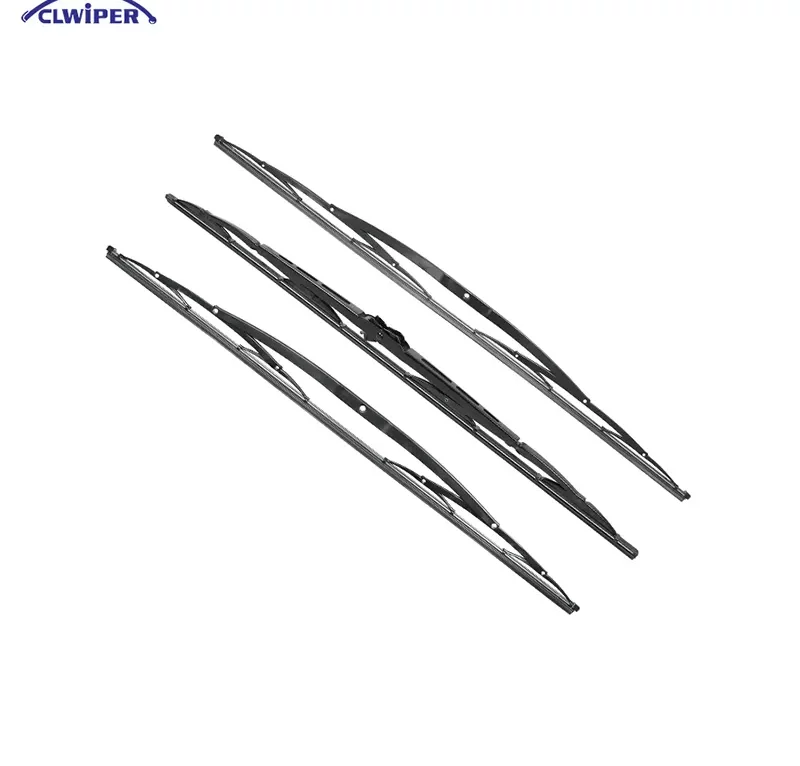
Щетки стеклоочистителей для автобусов и грузовиков представляют собой системы стеклоочистителей, размеры и усиление которых рассчитаны на большие размеры., льстить, и более вибрирующие лобовые стекла, встречающиеся на коммерческих автомобилях.. По сравнению со многими приложениями для легковых автомобилей, они могут использовать более длинные лезвия, но требуемая длина зависит от модели автомобиля, геометрия лобового стекла, и конфигурация рычага; они также испытывают более высокие аэродинамические нагрузки на постоянной скорости шоссе и должны поддерживать постоянный контакт со стеклом по более широкой дуге поворота..
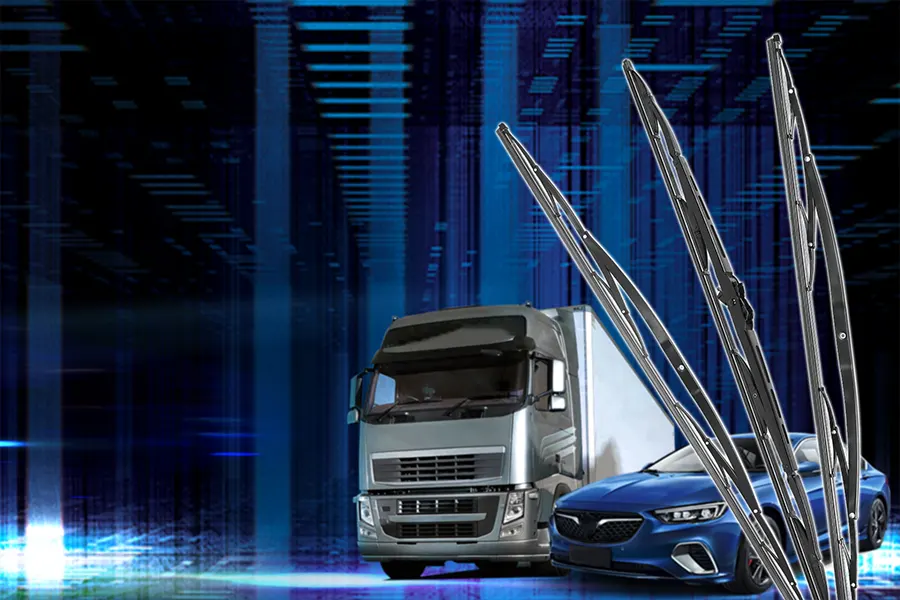
Лобовое стекло коммерческого автомобиля редко представляет собой один изогнутый кусок стекла.. Кабины тракторов с прицепами обычно имеют конструкцию с разделенным лобовым стеклом.: два высоких, относительно плоские стекла с центральной стойкой. Автобусы могут иметь один, широкое панорамное окно. Каждая конфигурация создает различную геометрию развертки., Требование к длине лезвия, and arm mounting position.
This guide is written for B2B buyers — fleet-parts distributors, vehicle-remarketing firms, and OEM procurement teams — who need to specify the correct blade for a known arm and windshield combination, source at wholesale volume, and avoid the most common cross-brand fitment mistakes.
What Extra Factors Should Buyers Confirm for Commercial Vehicles?
At the fundamental level, a truck blade is the same component type as any other: a wiping element (a natural-rubber or silicone refill, depending on the model), a structural spine or frame, and a connector. Rather than assuming a commercial blade differs in any fixed way, treat the following as factors to confirm against the specific vehicle and application.
| Factor | What to confirm for commercial use |
|---|---|
| Длина лезвия | Confirm against the vehicle’s windshield geometry, arm reach, and sweep pattern — do not assume a single “truck size” применяется. |
| Arm load / downforce | Confirm the arm’s pressure profile; it influences edge contact, шум, and element wear, and varies by vehicle and arm design. |
| Construction type | Confirm framed, луч, or hybrid against the actual arm and speed profile; passenger-style and heavy-duty options can overlap. |
| Operating speed | Confirm whether sustained highway speed introduces aerodynamic lift, which affects construction and pressure choice. |
| Vibration and shock | Confirm connector retention against loosening from road, engine, and axle inputs over long duty cycles. |
| Climate and corrosion | Confirm frame and adapter material and coating against the operating region (road salt, пыль, Укр, cold soak). |
For a general passenger replacement overview, see our replacement guide. The remainder of this article assumes a commercial-vehicle context.
How Do You Choose the Correct Blade Length?
Unlike passenger vehicles, where a quick size lookup often resolves the question, commercial-vehicle blade lengths are tied to the specific windshield geometry and arm configuration of the vehicle model. Two trucks of the same model year can use different lengths because their windshields and sweep arcs differ.
Starting point
If you are sourcing a replacement for a known fleet vehicle or an aftermarket SKU list:
- Note the OEM part number or the blade length marked on the existing blade (if present).
- Measure the blade itself from one end to the other, excluding the wiper arm. If end caps or projecting adapters affect the reference dimension, state exactly which points were measured.
- Confirm the sweep pattern: tandem (both arms sweep in the same direction), opposed (arms sweep outward from center), or single (one arm, bus-style).
For most truck cabs, driver-side and passenger-side lengths differ. Buses with a single central arm and a panoramic windshield may require a longer blade with a specific curvature to maintain glass contact at both ends of the sweep arc. Our general sizing guide covers the passenger side in more detail: какой размер щеток стеклоочистителя мне нужен.
Чего следует избегать
- Не предполагайте “дольше — лучше.” Лезвие, выступающее за край лобового стекла, может коснуться резинового уплотнителя и отскочить от стекла под нагрузкой на руку..
- Не заменяйте рычаги разной геометрии. (центральная стойка против. консольный) без проверки дуги развертки и зазора.
Как работают типы разъемов и адаптеров?
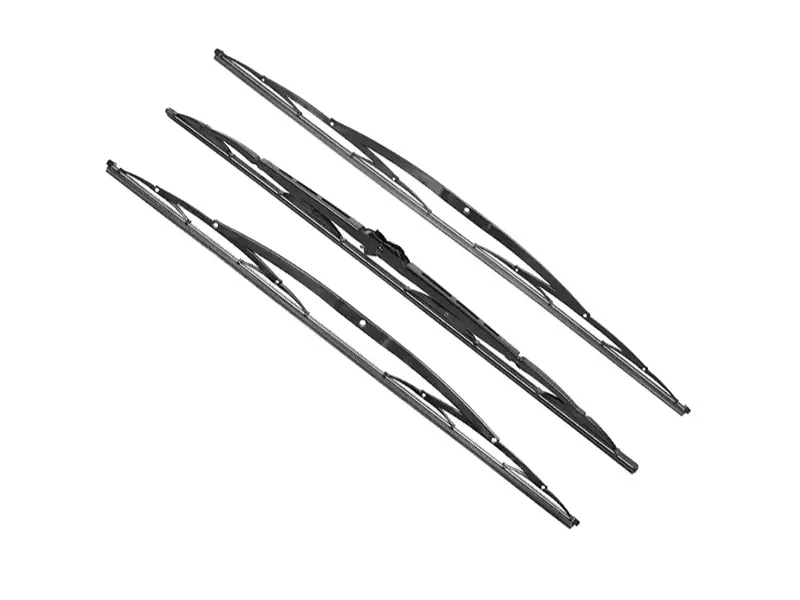
Разъем является интерфейсом между рычагом стеклоочистителя и щеткой.. На вторичном рынке коммерческого транспорта, Несоответствие разъемов может быть основным источником заказов неправильных деталей., даже если длина лезвия правильная.
Основные семейства разъемов
- U-образный крюк (J-крючок): Металлический крючок на конце руки; лезвие имеет соответствующий паз. Обычно встречается на легких грузовиках и некоторых старых автобусах.. Фиксацией может служить пластиковый зажим или металлическая пружина..
- Боковой штифт / верхняя булавка (кнопка): A round or rectangular pin on the arm engages with a matching opening or adapter on the blade. The pin dimensions and entry orientation must be confirmed before ordering.
- Flat-blade / direct-fit: The blade body integrates a clamp that slides over a flat arm end. More common in passenger vehicles; some light commercial vehicles use a scaled-up version.
- OEM-specific proprietary connectors: Some truck and bus OEMs use a unique adapter shape or bolt-on flange that is not cross-compatible. Confirm the adapter drawing or sample before bulk ordering.
For a full overview of connector types across all applications, see our Типы соединений лезвия стеклоочистителей article.
B2B note: If you are stocking a SKU list for a mixed fleet, you will likely need several adapter variants per blade length to cover the connector spread. Specify the adapter separately or as an included accessory so the factory can pre-fit or pack them correctly.
What Construction Works Best for Heavy-Duty Use?
Construction is a trade-off, not a ranking: the right choice depends on the arm, the windshield, and how the vehicle is driven. The three common patterns behave as follows.
Framed (общепринятый) construction
A metal frame with multiple pressure points and a rubber element clipped into it. It is common in heavy-duty use because:
- Multiple contact points can help maintain edge pressure on large, flat windshields, often with less spring tension than a single-tension beam requires.
- A rigid frame can help resist aerodynamic lift at sustained highway speed.
- Worn rubber can be replaced in some designs without changing the entire frame (see the refill sizing guide).
Trade-off: a larger exposed frame can mean more wind noise and slightly higher drag.
Луч (бескня) construction
A single spring-steel or synthetic spine wrapped in rubber, with no external frame. It appears in some long-haul applications for quieter operation and lower wind resistance:
- Pressure can be distributed more evenly through an integrated spring steel — with fewer discrete contact points.
- A lower profile can reduce lift at highway speed.
- With no exposed frame members, road-salt accumulation and corrosion may be reduced over time.
Trade-off: it relies on the arm to supply the correct downforce across the full arc; an incompatible arm on a long blade may cause under-pressure in the middle section. See our hybrid vs. луч comparison for the underlying mechanics.
Гибридный
A beam blade enclosed in a cosmetic and aerodynamic shell. It is less common in heavy-duty but appears on some premium buses and newer cab-over trucks where aesthetics and noise reduction are prioritized.
Element material
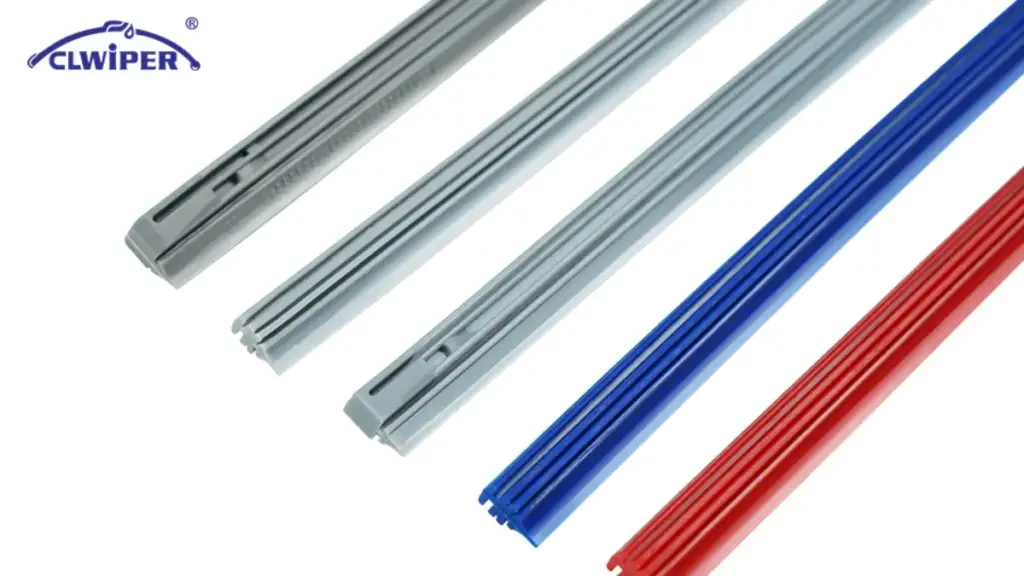
CLWIPER’s bus and truck category lists both natural-rubber and silicone refill options. Rubber is common for commercial blades, and buyers may request silicone refill options for specific climate or performance requirements, but the exact material construction and supporting test data should be confirmed before ordering. “Силикон” can refer to either a solid silicone element or a silicone-containing coating, and a product listing may not specify which — confirm the exact construction before ordering. See our silicone vs. rubber comparison.
What Should B2B Buyers Specify When Sourcing?
A complete bus or truck wiper blade specification should cover the following. Incomplete specifications can lead to avoidable fitment problems and sample revisions.
| Спецификация | Why it matters | What to supply |
|---|---|---|
| Длина лезвия | Determines fit to the sweep arc; must match the arm and windshield geometry | OEM part number, blade length measured without the arm, or a reference drawing |
| Connector type and dimensions | Governs whether the blade physically attaches to the arm | Connector type name, arm-end photo with a ruler, or sample |
| Строительство (framed / луч / гибридный) | Affects pressure distribution, шум, aerodynamic lift, и стоимость | Target vehicle model and speed profile, or a sample of the current blade |
| Element material and cross-section | Affects wiping quality, шум, and service life; cross-section affects refill compatibility if refillable | Material type; cross-section photo or profile drawing if refillable |
| Cold-weather and UV resistance | Element and frame coating degrade differently under sustained UV and temperature extremes | Operating region or the test standard required (НАПРИМЕР., low-temperature brittleness) |
| Corrosion protection (frame/adapter) | Road salt and wash chemicals can accelerate frame rust; matters for fleet service life | Frame material (stainless / plated steel / composite) and coating spec |
| Quantity and packaging | Affects freight cost per unit and warehouse handling | Units per inner box, units per master carton, pallet configuration |
| Private-label and branding | Logo, упаковка, and labeling are part of the product spec for distributors | Logo artwork, barcode/label requirements, packaging design files |
| Sample and lead-time expectations | Affects program timeline | Required pre-shipment sample count and target delivery window |
CLWIPER’s commercial line includes the CL708 truck/bus model; confirm exact lengths, варианты разъемов, и конструкция против вашей целевой руки и лобового стекла. Опубликованная оптовая программа CLWIPER охватывает заказы OEM/ODM., up to 3 бесплатные образцы (1-отправка за 3 дня), адаптируемые MOQ (около 500–5000 единиц), логотип с лазерной гравировкой и индивидуальная упаковка, с производством в Дунгуане, Гуандун. См. автобус & щетка стеклоочистителя грузовика категория или связаться с CLWIPER для цитаты.
Как стандарты и техническое обслуживание влияют на подбор флота?
В Соединенных Штатах, ФМВСС Нет. 104 (49 CFR 571.104) применяется к системам стеклоочистителей и омывателей ветровых стекол легковых автомобилей., многоцелевые пассажирские автомобили, грузовики, и автобусы. Он устанавливает требования на уровне системы., включая скорость очистки. Однако, подробные минимальные проценты вытираемой площади в стандарте указаны для легковых автомобилей., поэтому их не следует представлять как требования к размерам отвалов вторичного рынка для каждого грузовика или автобуса..
В повседневной работе автопарка, Состояние стеклоочистителей является видимым объектом предрейсовых и периодических проверок., поэтому группы по закупкам обычно устанавливают интервалы замены, которые обеспечивают полную обслуживаемость зоны обзора водителя, а не ждут, пока очистка явно выйдет из строя.. Общие сроки замены, see our replacement guide.
Часто задаваемые вопросы
Какой размер щеток стеклоочистителей у грузовиков?
Не существует единого стандартного размера щеток стеклоочистителей для грузовиков и автобусов.. Подтвердите необходимую длину, используя модель автомобиля., OEM part number, существующее лезвие, или утвержденные данные по установке. Длина со стороны водителя и пассажира может различаться на одном и том же автомобиле..
Могу ли я использовать балку пассажирского размера на легком грузовике??
Лезвие должно соответствовать профилю прижимной силы рычага и дуге стреловидности лобового стекла.. Более короткое или мягкое лезвие на тяжелой руке может дребезжать., пропускать, или поднять на скорости; более длинный может коснуться уплотнителя стекла. If you are considering this cross-application, send the arm-end photo and a blade-only length measurement to the supplier before ordering.
How often should commercial wiper blades be replaced?
Commercial wiper blades should be inspected as part of the fleet’s preventive-maintenance program and replaced when wiping quality, edge condition, connector retention, or frame condition no longer meets the fleet’s acceptance criteria. The interval depends on mileage, климат, operating hours, and inspection policy, rather than a fixed calendar period.
Do you supply refills for truck blades?
CLWIPER’s bus and truck product category lists natural-rubber and silicone refill options. Refill compatibility still depends on the specific blade frame, profile, rail arrangement, and retention method, so confirm the applicable model before ordering. Для определения размера, see our Руководство по измерению заправки щетки стеклоочистителя или обратитесь на завод с имеющимся сечением элемента.
Готовы предложить программу щеток стеклоочистителей для автобусов или грузовиков.? Связаться с CLWIPER с целевой моделью автомобиля, тип разъема, длина лезвия, предпочтение в строительстве, и количество заказа. Команда может подтвердить совместимость фитинга перед отбором проб и ценой..