Not automatically, and not automatically the same either. Left-hand drive and right-hand drive change where the driver sits, which usually changes which side of the windscreen carries the longer blade and which side has to clear the widest arc. The blade itself is handed only when its own design makes it so: an asymmetric cover profile, a spine pre-curved for one travel direction, or a kit whose per-side lengths are packed for one layout. The answer is therefore per model and per position, taken from application data rather than from the drive side alone.
This page is written for buyers and distributors who move stock between markets with different steering-wheel positions. It covers what the drive side actually changes, which features have to be checked before assuming a part transfers, what a catalogue line reading “suitable for both LHD and RHD” does and does not claim, how to build a verification record across markets, and what to confirm on samples and on the printed packaging.
Does Left-Hand or Right-Hand Drive Automatically Require Different Blades?
No rule runs in either direction. Three separate questions sit behind the one people actually ask, and they get different answers:
- Is the blade body handed? On a symmetric beam or hybrid design, no. The same part number can sit on either side of the car because nothing in the profile prefers one direction of travel.
- Is the application handed? Usually yes. Driver-side and passenger-side duties are not equal, and swapping which side the driver sits on swaps which duty each length is doing.
- Is the requirement handed? Also yes, and this is the part most buyers stop seeing. The cleared-area target is drawn around the driver, not around the centreline of the car.
The third point is the reason a mirrored market cannot be handled by assumption. The US federal wiper standard expresses its wiped-area requirement as a percentage of Areas A, B and C of the windshield, and those areas are built from angles that are deliberately unequal left to right. For passenger cars under 1520 mm in overall width, the table requires Area A to be at least 80 per cent wiped within bounds of 16 degrees on the left and 49 degrees on the right, measured from a plan view reference line drawn from the steering wheel centreline on bench-seat vehicles or through the centre of the driver’s designated seating position on vehicles with individual seats, and a glazing surface reference line 635 mm above the seating reference point (49 CFR 571.104, S3 and S4.1.2).
Read carefully, that is a statement about the vehicle as built, not about replacement parts: the standard applies to windshield wiping systems on passenger cars, multipurpose passenger vehicles, trucks and buses. It still gives a buyer something useful. Because the target area follows the driver’s position, moving the driver to the other side mirrors the target, and a wiping layout designed to hit it is usually mirrored too. The blade that meets that layout is often the same component; the assignment of lengths to sides is what moves. Whether a connector suits the arm at the end of that assignment is a separate check, covered in our guide to wiper blade connection types.
Which Layout and Directional Features Need Checking?
Work from the outside of the car inward, in this order.
Sweep pattern. How the two arcs relate to each other decides whether a length can move between sides at all. Most cars use a paired sweep; single-arm and centrally mounted systems behave differently, and heavy vehicles add their own cases. Nosso bus and truck blade guide sets out the tandem, opposed and single-arm patterns and notes that for most truck cabs the driver-side and passenger-side lengths differ. The same reasoning applies to a passenger car that has been re-parked on the other side of the road.

Position. Driver, passenger and rear are three separate answers. A rear window is rarely mirrored in the same simple way as the windscreen, because the blade has to clear a spoiler, a defroster edge and a park position set by the tailgate.
Per-side length. Paired lengths are usually unequal, and the inequality belongs to the glass, not to the steering wheel. Nosso Civic size reference shows a 26 e 18 inch pair for one generation: unequal by design. That is a within-market example and it is not evidence about drive side; it is here to make one point only, which is that a pair carries two answers, and mirroring a market does not make them equal.
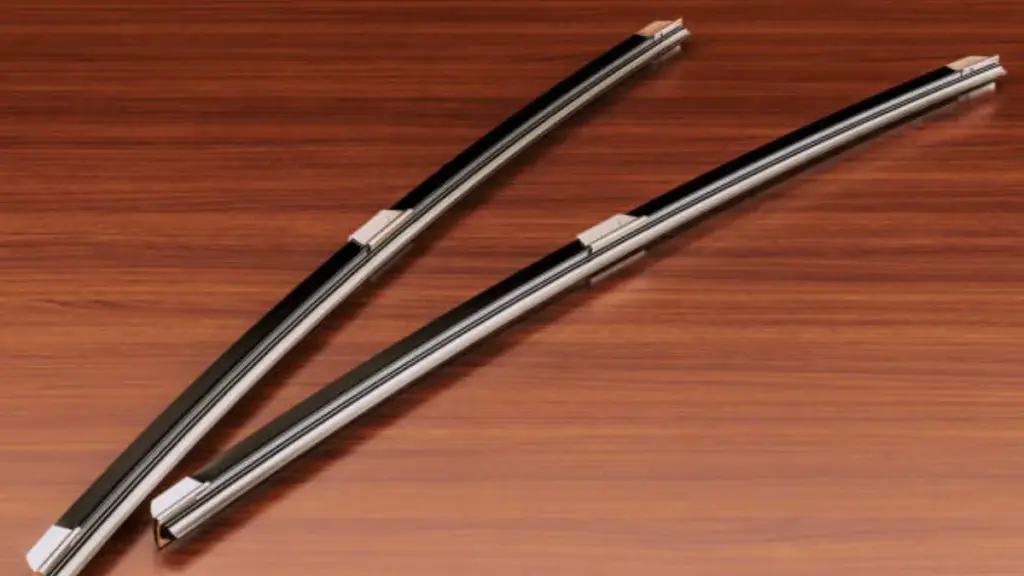
Direction-dependent features. A cover or aero profile that is asymmetric about the blade’s centreline, or a spine shaped to load against the glass in one travel direction, makes mounting orientation a real constraint. Where those features are absent and the profile is symmetric, the part runs the other way round without change. Whether a model has an asymmetric profile at all is a construction question, and the structural difference between beam and frame designs is set out in our page on what beam wiper blades are. This is the place where a generic article would invent an example, so we will not: CLWIPER’s published product data for its beam range states drive compatibility, not a direction of travel, and we do not hold a verified mounting-direction diagram for those models. Until that diagram exists for a specific SKU, the direction question stays open on that SKU rather than answered by analogy.
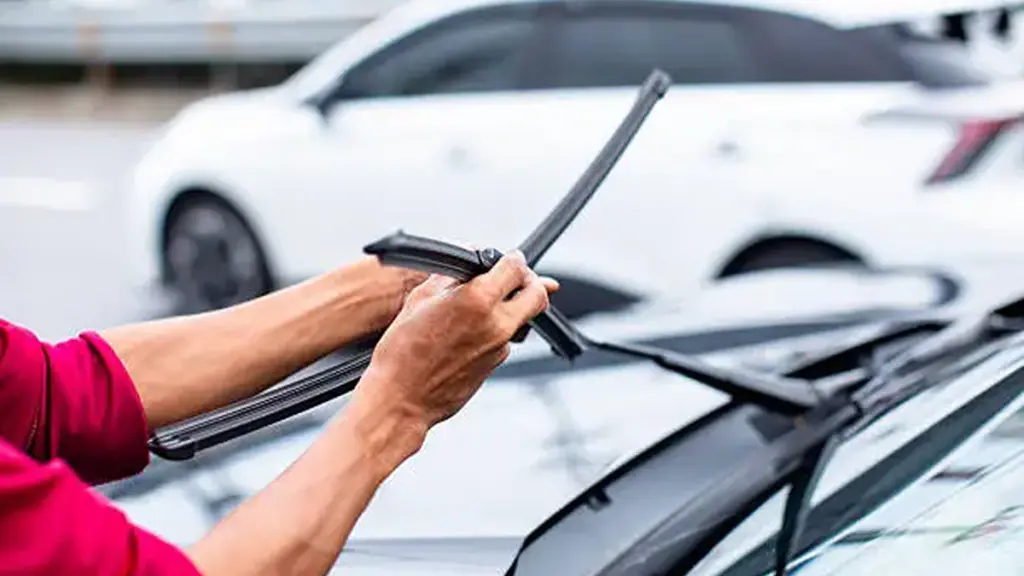
Arm end. The joint at the end of the arm is set by the vehicle, and it does not change because the driver moved. Same hook family, different wire depth or hook geometry between markets is common enough that the arm end should be photographed per application rather than inferred from the model name.
What Does “Suitable for Both LHD and RHD” Actually Mean?
It is a statement about one SKU’s body and connector range, and it is worth reading it that narrowly. Two of our published product pages carry the wording directly: o CL709 beam blade is listed as a universal flat blade “for left-hand drive and right-hand drive”, offered in a size range running from 12 para 28 polegadas, and the CL608 POM adaptor beam blade carries the same sentence for the U-hook applications it is built around.
What that tells you: the blade is symmetric enough, and its connector handling general enough, that the same part number is not rejected on the basis of which side the driver sits.
What it does not tell you, in three over-reads that cause returns:
- It is not coverage of every vehicle. A drive-compatibility line and a connector coverage line are two different claims, and neither is a list of verified applications for a specific make, modelo, years and body style.
- It is not a statement about cleared area. Nothing in that sentence says the resulting sweep meets the mirrored area target for a given windscreen. Which length goes on which side still decides that.
- It does not extend to a brand or a series. One SKU carrying the wording says nothing about its siblings. The multifunctional designs in the same catalogue are listed with adapter counts and a driver side field instead: o CL908 page, por exemplo, records “Lado do motorista: Esquerda / certo” as an option to be chosen. Where a catalogue asks you to pick a side, the part is not side-blind.
So when a supplier’s line reads “suitable for both”, the useful follow-up question is narrow and answerable: for which SKU, in which sizes, fitted to which arm end, on which position of which applications. Anything the answer cannot cover stays unverified rather than assumed.
How Should Buyers Verify Applications Across Different Markets?
Build the check as a mirror test, field by field. The table below separates what moves when the drive side moves from what stays put, so a market transfer becomes a list of decisions rather than a guess.

| Field to check | What usually happens when the drive side mirrors | How to confirm it for the SKU you are quoting |
|---|---|---|
| Blade body and profile | No change if the design is symmetric; a real change if the cover or spine is directional | The model’s own specification sheet, read for a direction statement rather than inferred from the type |
| Per-side lengths | The two figures swap sides; they rarely become equal | Application data for that market, body style and years, recorded per position |
| Arm end and adapter | No change from the drive side; may still differ between market variants of one model | A photo of the arm end with the old blade removed, matched against the adapter numbering |
| Park position and clearance | Follows the mirrored layout; cowl, A-pillar and mirror-pocket limits move with it | Full-travel observation on wet glass for each position, not a static fit check |
| Rear application | Decided by the tailgate, not mirrored with the front pair | Rear arm photo plus body style; treated as its own application line |
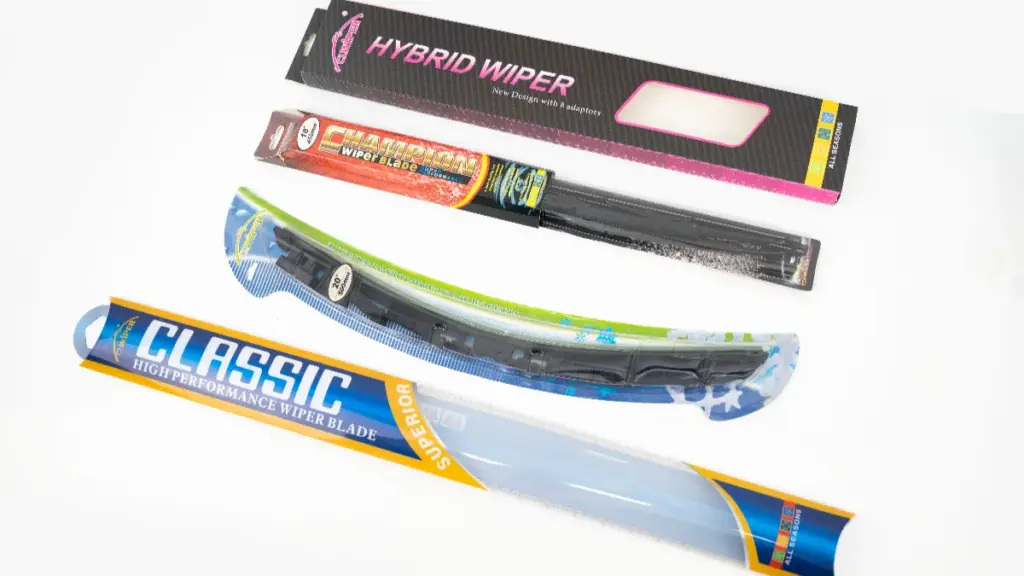
| Packaging and side marking | Needs re-printing or re-labelling if the sleeve assigns a side | Artwork proof checked against the market’s side assignment before the print run |
Two fields sit outside the mirror and are easy to forget: the market’s own year split for a model, and whether the variant being quoted is the one the application data describes. A size guide written for one market’s versions is not transferable to another market’s version of the same name. The identification step is in our general size guide, and the arm-end, adapter and blade matching that follows from it belongs to how to verify vehicle fitment for multi-adapter blades.
What Should Be Confirmed on Samples and Packaging?
Before a market order, three confirmations are cheap and one is not optional.
Mounting direction, if the profile is asymmetric. Fit the sample the way the market’s layout would have it fitted, run the full travel and watch the outer tip. A blade that lifts at the end of the arc, or chatters as it reverses, is telling you something about how it meets the glass. Where the profile is symmetric, record that too, because it is the fact that lets the same SKU serve both markets.
Running behaviour on wet glass. One adjusted condition at a time, several cycles, and a record of where each arc ends. A short trial on a dry or lightly misted screen proves very little about either layout. The method for running this as a comparable test, and what to write down so the result means something to the other side of the transaction, is set out in our page on wiper blade sample testing.
Side marking on the packaging. If the artwork states a side, the side has to be right for the market being shipped. A catalogue that asks the buyer to choose “Lado do motorista: Esquerda / certo” is not ambiguous about this, and a sleeve printed for one layout will mislead in the other. The same applies to adapter numbering printed on the pack: the number shown should be the number in the pack.
The record that survives the order. What is not on paper will be re-debated at the first complaint. The minimum is the application list, the SKU, the position, the side assignment and who confirmed it. The fitment check page carries the confirmation table we use for that.
Stocking for Both Layouts?
FAQs About LHD and RHD Wiper Blades
Are all beam blades interchangeable between left-hand and right-hand drive?
The part usually is; the application is not. A symmetric beam blade has no preferred direction, so the same SKU can serve either layout. What changes is which side carries which length, and whether the arm end it clips to is the one on that car. Treating “the blade has no side” as “the fitment needs no check” is where orders go wrong.
Can I solve a directional problem by fitting the blade the other way round?
Only if the design allows it, and that is a specification question. A blade with an asymmetric cover or a spine curved to load in one travel direction can shed contact, lift at the tip or noise up when reversed, particularly as speed builds. If the model’s data does not state a direction, run the travel test both ways and record what changes rather than assuming the flip is free.
If the adapter fits, does that make the blade universal for the market?
Não. Adapter compatibility answers a mechanical question about one joint. Market suitability also involves the length assigned to that position, the sweep relationship with the other blade, and the clearance at the edge of the glass. Those are application fields, and no connector claim covers them.
How is the driver side identified on a blade or a pack?
Sometimes explicitly, sometimes not at all. Some product lines carry a driver-side field to be chosen at order, which is the clearest signal a part is side-sensitive. Otherwise the practical identifiers are the length marked on the unit, the position it is documented for in the application list, and a photo of the arm it came off. If none of those agree, treat the side as unconfirmed instead of guessing from the shorter blade.
Can the same car model need different blades in different markets?
Sim, and the drive side is only one of the reasons. Year splits, body styles, windscreen tooling and arm-end choices all move the answer. Two market versions of one model name can carry different per-side lengths even where both are the same layout. Verify against the fields, record which version the decision was made on, and do not mirror an application list across markets without checking it.