Moving wiper blades across borders requires careful planning at every stage, from inner packaging to final delivery. Their long shape, flexible structure, and relatively low weight create a very different logistics profile compared to most auto parts. If packaging and freight decisions are not aligned, costs increase quickly and product performance may be affected by transit conditions.
This guide breaks down the key factors importers should focus on, with practical details that can be applied directly to real orders.
What Makes Wiper Blades Different to Ship Than Other Auto Parts
Wiper blades are unique due to their long, slender, and flexible design, delicate multi-element construction, and precise rubber squeegees. Unlike bulky auto parts, they are prone to bending, frame distortion, and rubber degradation, requiring specialized packaging for protection from compression, moisture, and impact during transit.
Unique Physical Characteristics & Susceptibility to Damage
Lightweight and flexible construction: Wiper blades can be up to 32″ (800mm) long but weigh as little as 30g, making them prone to bending.
Multi-element and delicate designs: Features like riveted links, hybrid frames, and multiple wiping edges (7-10) are susceptible to distortion or damage from stack pressure.
Temperature-sensitive rubber: Squeegee rubber (natural, HYCAR synthetic) needs protection from extreme temperatures (-40° C a +80 ° C.) and chemical degradation.
Corrosion-resistant materials: Galvanized steel frames and stainless steel flexors require moisture-proofing to maintain their IP54 rating and prevent rust.
Specific Shipping Challenges & Packaging Considerations
Profile vs. volume: Wiper blades enable dense packing in thin profiles, but their length and fragility demand protection against external forces, unlike bulkier auto parts.
Protection from stack pressure: Their precision assembly makes them prone to frame distortion under weight, requiring padded and length-sorted cartons.
Diverse arm fittings: Various attachment types (Por exemplo, 9×3mm hookslot, 14mm saddle-type) necessitate organized, often segregated, packaging to prevent mismatch damage or bending.
Moisture control: Emphasis is on moisture-proofing over heavy cushioning to prevent rubber hardening or metal corrosion, ensuring durability for 50,000+ wipe cycles.
Common Packaging Styles for Wiper Blades (Boxes, Blisters, Sleeves)
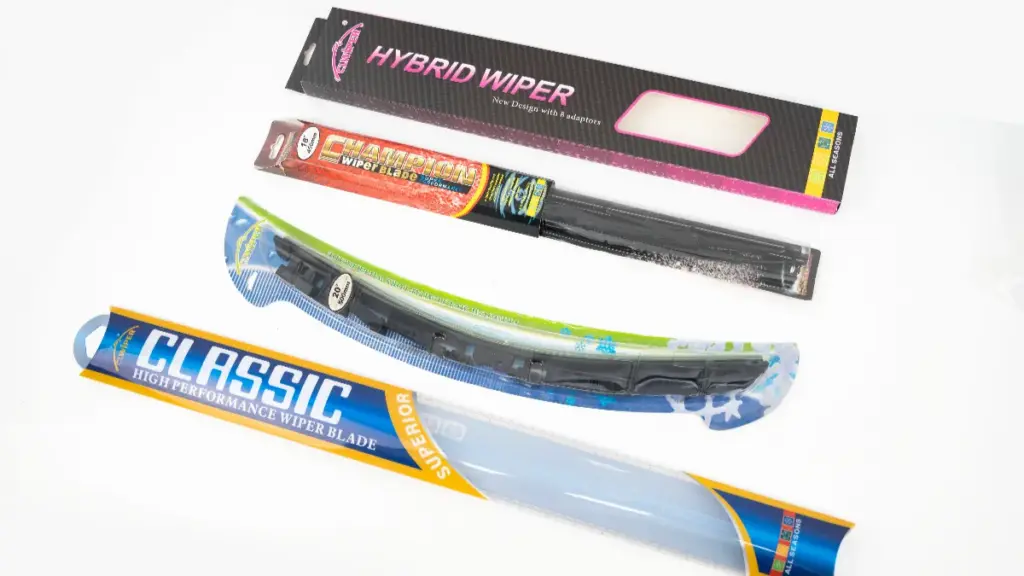
Overview of Primary Wiper Blade Packaging Types
| Packaging Type | Protection | Display Effect | Space Efficiency | Cost Level |
|---|---|---|---|---|
| Paper Box | Médio | Good | Médio | Médio |
| Blister Pack | Alto | Excellent | Baixo | Alto |
| Sleeve | Baixo | Basic | Alto | Baixo |
| Bulk + Bag | Baixo | None | Muito alto | Muito baixo |
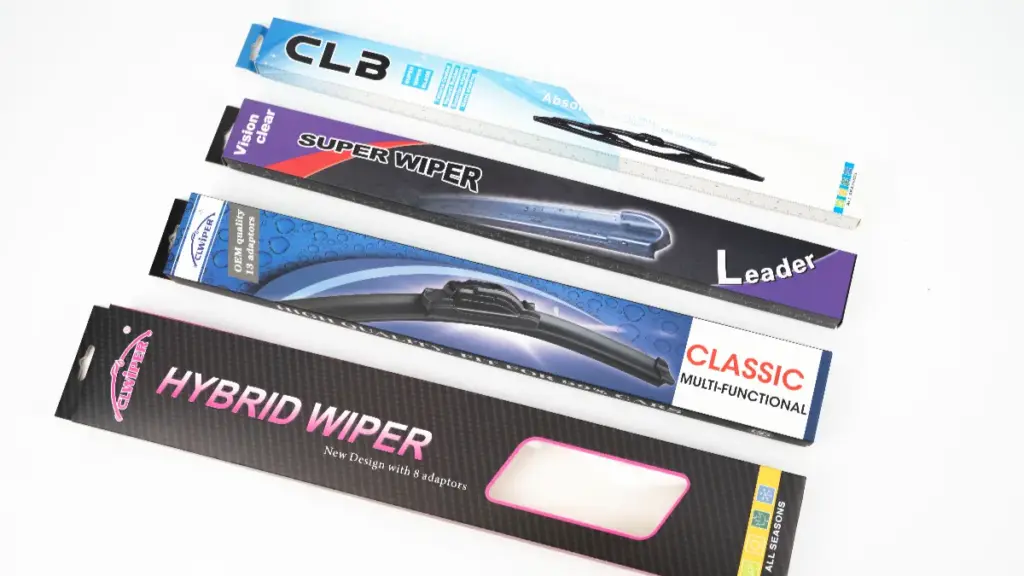
Folding Cartons (Boxes): Common styles include Straight Tuck End, Reverse Tuck End, and Auto Bottom, designed for quick assembly and secure closure. These are often made from lightweight cardstock and are custom-fitted for long, narrow wiper blades, typically ranging from 9” to 28” in length.
Blister Packs: Feature a raised plastic cavity that securely holds the wiper blade, preventing cuts or injury during handling. This method is effective for retail display and offers clear visibility of the product.
Sleeves and Specialty Designs: This category includes Sliding Sleeves for compact presentation and robust E-flute Corrugated packaging, frequently used for e-commerce shipping due to its added protection. Clear PET Boxes also offer durability and transparency for aftermarket sales.
Material Specifications and Structural Protection Features
Material Selection: Packaging utilizes various paper stocks with thicknesses ranging from 10pt to 28pt (equivalent to 60lb to 400lb). Options include Eco-Friendly Kraft, Bux Board, and Cardstock, with corrugated cardboard, particularly E-flute, favored for heavy protection and e-commerce shipments.
Structural Integrity: Designs prioritize custom-fit and snug enclosures to minimize movement, flexão, and damage during shipping. This includes incorporating ‘strength edges’ and using tear-resistant materials to withstand the rigors of international transit.
Customization and Branding: Packaging frequently employs processes such as Die Cutting, Gluing, Scoring, and Perforation. Custom options like Window Cut-outs, Gold/Silver Foiling, Embossing, Raised Ink, and PVC Sheets are used to enhance branding and shelf appeal.
How to Design Cartons for Long, Slim Wiper Products
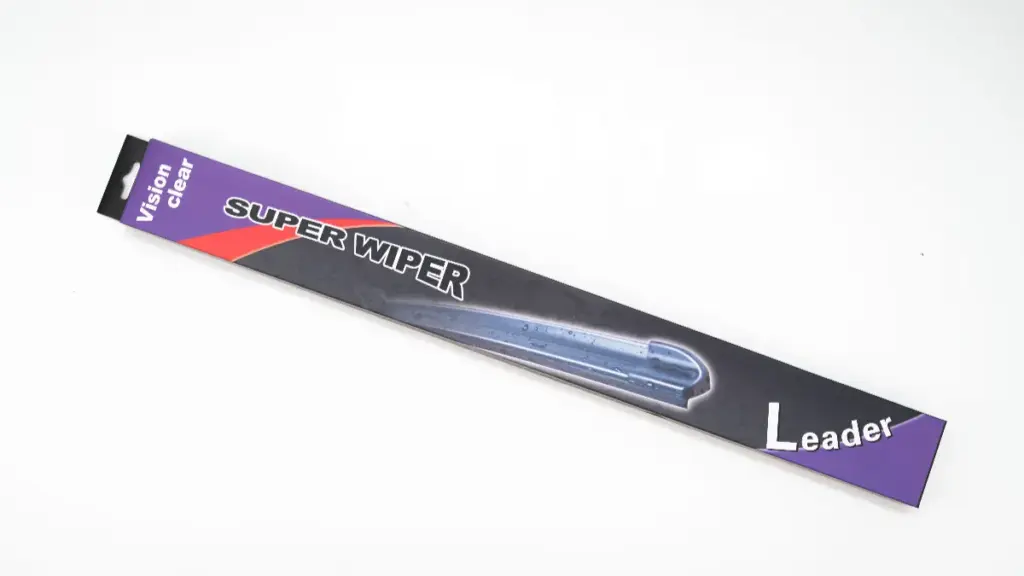
Designing cartons for long, slim wiper products requires careful consideration of blade length, cross-section, and material. Key steps include sizing the inner carton just over the blade length, ensuring a tight fit to minimize movement, and selecting durable materials like 10-28 pt paperboard or E-flute corrugated, often combined with internal inserts for optimal protection against damage.
| Design Aspect | Key Specification/Material | Benefit/Detail |
|---|---|---|
| Carton Length | Just over blade length (9–28 in / 230–710 mm); Common: 16 em (405 mm), 18 em (450 mm) | Accommodates various blade sizes, prevents axial movement, protects rubber lip from ends. |
| Carton Cross-section | As tight as possible | Minimizes movement and vibration during transit, reduces freight volume. |
| Internal Protection | Thermoformed plastic insert, slightly longer than blade, V-shaped cut-outs | Holds blade immovably longitudinally, protects rubber squeegee, flexes with blade curvature. |
| Primary Material | 10–28 pt paperboard (200–450 gsm) or E-flute corrugated | Provides robust long/slim boxes for retail and e-commerce; options include Kraft, bux board, cardstock, PET. |
| Carton Styles & Características | Straight/Reverse tuck end, auto-lock bottom, sliding sleeves, blister + carton, hang-tabs | Supports custom narrow sizes, enhances retail display (peg-friendly), and provides varied protection levels. |
| Manufacturing Processes | Die-cutting, scoring, perforation, gluing | Ensures precise dimensions, straightness, and stacking strength for shipping and display. |
Core Design Considerations for Protection and Fit
Size inner carton length just over the blade length, accommodating typical wiper blade ranges of 9–28 in (230–710 mm) and common retail sizes like 16 em (405 mm) e 18 em (450 mm).
Maintain the cross-section as tight as possible to minimize movement and reduce freight volume.
Consider using a thermoformed plastic insert, slightly longer than the blade, to hold blades immovably in the longitudinal direction and prevent the rubber lip from hitting box ends.
Design inserts with lower bending stiffness than the blade, often incorporating V-shaped cut-outs, to allow flexibility while protecting the rubber squeegee.
Optimizing Carton Structure and Material for Durability
Utilize 10–28 pt paperboard (≈60–400 lb; ~200–450 gsm) or E-flute corrugated for robust long, slim boxes, with E-flute favored for e-commerce and heavier multi-packs.
Common material options include Kraft, bux board, cardstock, corrugated, and clear PET for visibility and impact protection.
Employ custom long/narrow carton styles such as straight tuck end, reverse tuck end, auto-lock bottom, sliding sleeves, and blister + carton combinations.
Integrate retail-friendly features like hang-tabs for peg displays, typically produced via die-cutting, scoring, perforation, and gluing.
Your Trusted Partner for Premium Wiper Blade Manufacturing
Sea Freight, Air Freight and Courier: Which Mode Fits Your Shipment
Choosing the right freight mode for wiper blades depends on shipment size, urgency, e orçamento. Express courier is for small, urgent parcels (<50 kg, 3-5 dias), air freight for mid-range (50-500 kg, 7-14 dias), and sea freight for large volumes (>500 kg, 25-40 dias) offering the lowest cost and carbon footprint.
Understanding the Core International Freight Options
Express Freight (International Courier): Designed for urgent, small parcels, typically limited to under 50 kg with transit times of 3-5 dias (Por exemplo, China-US West Coast door-to-door). Services are dominated by companies like UPS, FedEx, and DHL.
Air Freight: Suitable for shipments weighing between 50-500 kg, offering transit times of 7-14 dias (premium services might be 5-8 dias). It provides higher security and lower damage risk compared to sea freight but comes with higher costs and stricter restrictions on hazardous items.
Ocean Freight (Sea): The most cost-effective option for large volumes, ideal for shipments over 500 kg. Transit times range from 25-40 dias (premium options 18-30 dias), handling approximately 80% of global freight volume with the lowest CO2 emissions per unit.
Optimizing Wiper Blade Shipments: Custo, Speed, and Capacity Comparisons
Custo-efetividade: Ocean freight offers the lowest cost per unit for bulk wiper blade imports (>500 kg), making it ideal for budget-conscious first-time importers.
Speed & Urgency: Express courier (3-5 dias) is best for samples or small, highly urgent orders (<50 kg). Air freight (7-14 dias) balances speed and cost for mid-sized, time-sensitive loads (50-500 kg).
Capacity & Volume: Sea freight is unmatched for bulky or oversized cargo and high-volume orders of wiper blades, managing >500 kg effectively, despite longer transit times (25-40 dias).
Damage & Security: Air freight generally offers reduced damage probability and higher security compared to sea freight, which can face risks from port congestion and weather delays.
Environmental Impact: Ocean freight has the lowest CO2 emissions per unit among the international modes, while domestic ground options like intermodal rail can reduce emissions by up to 30% compared to over-road trucking for long hauls (>600 miles).
How Freight Cost Is Calculated for Wiper Cartons (Weight vs Volume)
Freight cost for wiper cartons is based on chargeable weight, which is the greater of the package’s actual weight or its volumetric (dimensional) weight. This method accounts for the space occupied by bulky, low-density items, using carrier-specific formulas and divisors to ensure fair pricing.
| Metric | Definition/Formula | Key Details / Examples |
|---|---|---|
| Chargeable Weight | Higher of Actual Weight vs. Volumetric Weight (kg) | Applied per package, then summed for multi-package shipments. |
| Volumetric Weight Formula | (Length cm × Width cm × Height cm) / Divisor | Divisor 5,000: DHL/FedEx/UPS air freight Divisor 3,000: Road freight Divisor 166.67: Some cargo standards |
| Example 1 (Air-like) | Calculation: (50×40×30 cm) / 5,000 = 12 kg volumetric | If actual weight is 5 kg, chargeable weight is 12 kg. |
| Example 2 (Road Freight) | Calculation: (120×100×90 cm) / 3,000 = 360 kg volumetric | If actual weight is 410 kg, chargeable weight is 410 kg. |
Understanding Chargeable Weight: Actual vs. Volumetric
Chargeable Weight is the higher of a package’s actual weight or its calculated volumetric weight (kg).
This concept is crucial for lightweight, bulky items like packaged wiper blades, where the space occupied (volume) often exceeds the physical weight.
Freight carriers apply chargeable weight per package, and then sum these values for multi-package shipments to determine total shipping cost.
Volumetric Weight Calculation: Formulas and Carrier Divisors
The standard Volumetric Weight Formula is: (Length cm × Width cm × Height cm) / Divisor, measuring the carton’s outermost dimensions.
Carrier-specific Divisors vary: 5,000 is common for DHL/FedEx/UPS air freight; 3,000 for road freight; e 166.67 for some cargo standards.
Example 1 (Air-like): A 50×40×30 cm package (divisor 5,000) yields 12 kg volumetric weight. If actual weight is 5 kg, the chargeable weight is 12 kg.
Example 2 (Road): A 120×100×90 cm package (divisor 3,000) yields 360 kg volumetric weight. If actual weight is 410 kg, the chargeable weight is 410 kg.
Practical Tips to Reduce Damage and Claims During Transport
Reducing shipping damage involves a multi-faceted approach, including robust packaging with void fill and custom inserts, secure palletization, proper sealing, clear labeling, and environmental controls like desiccants and thermal insulation, all supported by monitoring tools.
Optimizing Internal Protection and External Stability
Utilize double-wall corrugated boxes for enhanced structural integrity under stacking loads.
Employ custom foam inserts or molded pulp trays to secure product contours and eliminate movement.
Fill all voids with cushioning materials (Por exemplo, bubble wrap, air pillows, packing peanuts) ensuring 2-3 inches of buffer space around items.
Secure pallets using shrink wrap/stretch film and load bars or straps to prevent shifting during transit.
Ensure even weight distribution on pallets to maintain stability and prevent tipping or crushing.
Implementing Advanced Sealing, Environmental, and Monitoring Solutions
Apply the H-taping method with strong adhesive tape on all box seams and edges for secure flap closure.
Use tamper-evident tape for high-value shipments to deter theft and indicate interference.
Clearly mark packages with ‘Fragile’, ‘Handle with Care’, and ‘This Side Up’ labels in multiple languages for international shipping.
Include silica gel packs or desiccants for humidity control, aiming to maintain less than 50% relative humidity for moisture-sensitive goods.
Use insulated packaging or thermal blankets to protect against temperature fluctuations.
Deploy shock/vibration indicators (Por exemplo, color-change labels) and data loggers for real-time temperature/humidity monitoring.
Conduct drop tests to simulate shipping conditions and validate packaging effectiveness.
Work With CLWIPER On Packaging And Shipping Optimization
CLWIPER integrates packaging design and logistics planning into one process. This helps customers reduce cost while maintaining product quality.
What We Support
- OEM and ODM packaging design
- Custom logo printing and branded boxes
- Free samples for packaging testing
- Carton optimization for better loading efficiency
- Full container and consolidated shipment coordination
Our Practical Advantages
- Experience with multiple global markets
- Familiar with different packaging standards
- Ability to adjust packing based on shipping method
Next Step
If you are planning to import wiper blades or improve your current packaging and shipping setup, you can contact our team directly.
- Website: https://wipermarket.com/
- Email: admin@wipermarket.net.cn
We can provide sample support and tailored packing solutions based on your order structure.
Perguntas frequentes
Why do wiper blades need special attention in shipping compared with other parts?
Wiper blades require special attention in shipping due to their flexible rubber elements and pre-curved metal frames, which are prone to distortion, flexão, nicks, lágrimas, or permanent “definir” if stacked, bent, or exposed to debris—unlike rigid parts—necessitating protective packaging to preserve OEM contour fit and wipe quality. Rubber elements distort if blades are stacked or stored without protection; thermal cycling tested from -40°C to +80°C.
What packaging and carton styles work best for long wiper blades?
For long wiper blades (≈24–32″), the most robust and freight‑efficient solution is a long, narrow folding carton (straight‑tuck or reverse‑tuck end) made from 18–24 pt (≈0.018–0.024″) SBS/cardboard or 10–28 pt (60–400 lb) paperboard, packed in tight‑fit E‑flute corrugated master cartons sized to the blade length (typically 9–28″) with minimal free space. Blister or PET sleeve packs are often added for impact and bend protection, then unit packs are “shingled” flat in E‑flute or B‑flute outer cartons for export. Commercial wiper blade packaging for automotive use commonly specifies 10–28 pt (60–400 lb) paperboard and E‑flute corrugated for individual and shipping cartons.
When should I use sea freight, air freight or courier for wiper shipments?
Use courier or air freight (Por exemplo, FedEx 2Day, UPS Ground) for wiper shipments under bulk thresholds (typically small parcels or single orders), as industry retailers ship wiper blades this way with 1-5 day delivery; reserve sea freight for large-volume palletized shipments exceeding courier limits (Por exemplo, >150 lbs or >130 cubic feet per standard freight threshold). 2 business days (FedEx 2Day standard for wiper blade orders placed before 3 PM MST).
How do shipping companies calculate freight cost for wiper cartons?
For wiper cartons, freight companies calculate cost from the chargeable weight, which is the higher of the actual weight in kg and the volumetric (dimensional) weight computed from the carton’s length × width × height, then multiply that by a rate per kg or per freight class, adjusted for lane (origin–destination distance), mode (air/sea/truck), and accessorial fees. For air freight, a common industry divisor is 5,000–6,000 cm³/kg, so a wiper master carton’s volumetric weight = (L(cm) × W(cm) × H(cm) ÷ 5,000–6,000), and the higher of this vs. actual kg is billed at the lane’s USD/kg rate. For road/LTL freight, carriers convert carton or pallet dimensions to cubic feet and density (lb/ft³) and then assign an NMFC freight class (typically class 50–85 for dense automotive parts), with lower classes costing less per hundredweight (CWT). Dimensional weight (airfreight) = (L × W × H (cm) ÷ 6,000) kg (typical industry divisor).
How can I reduce the risk of bent or damaged wipers in transit?
Use rigid retail packs or inner trays that fully support the blade along its length, pack blades flat (not bent), avoid stacking bare blades, and lock the rubber element and bridge so they cannot twist or take a “set” during transport. GM’s service bulletin explicitly warns that wiper blades should not be stacked and must be kept in protective packaging to avoid distortion or permanent bending of the rubber and frame during storage and handling. For vehicle readiness and regulatory inspections, wipers must arrive undamaged, with no torn rubber and no bent metal parts, and must maintain full, firm contact with the windshield after shipping. GM bulletin 24‑NA‑164: “Blades should not be stacked on one another as the blade element can be distorted and take a ‘set’ that compromises wipe quality… Wiper blades should be kept in the protective packaging as long as possible to mitigate outside damage.”
What extra steps are needed when shipping wipers to FBA or 3PL warehouses?
When shipping wiper blades to Amazon FBA or 3PL warehouses, extra steps include securely enclosing the sharp metal blades, tips, or edges in plastic blade guards or cardboard sleeves to prevent piercing packaging, using poly bags (at least 1.5 mil thick, transparent, with suffocation warnings) if items are loose, and adhering to box limits of 50 lbs max weight and 25-36 inches per side; for pallets, use GMA standard Grade B or higher wooden pallets wrapped in clear plastic with labels on all sides. Boxes must weigh no more than 50 lbs (22.68 kg) with no side exceeding 36 polegadas (36″ L × 25″ W × 25″ H).