Wipers freeze to the glass when water is left sitting at the wiping edge and the temperature drops below zero. The practical answer is to take that water out of the equation before parking: clear the snow, dry the element and the contact line, keep the screen dry if you use a cover, and thaw with the vehicle’s defroster rather than force.
This article covers overnight prevention, whether lifting the blades is the right call, what to do once the blades are already stuck, how much of the problem a winter blade really solves, and how to inspect a blade after it thaws. Choosing between winter and all-season constructions is a separate decision with its own trade-offs, so it is not re-argued here.
How Can You Reduce the Risk of Wipers Freezing Overnight?
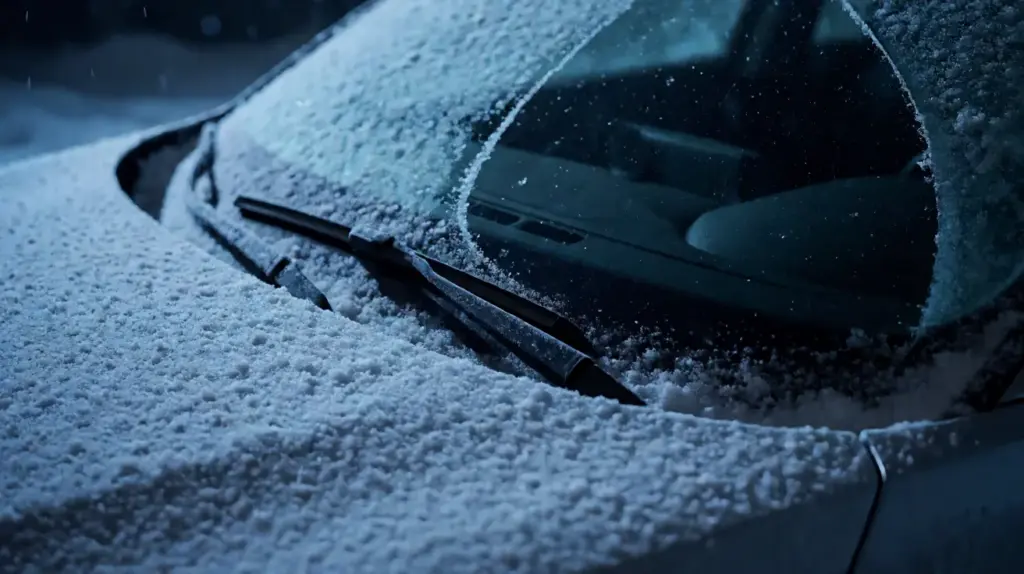
Freezing needs water, and on a parked vehicle the water usually comes from three places: meltwater from snow sitting on the screen, condensation from a warm cabin cooling overnight, and whatever was left on the glass after the last drive. Work through them in that order.
- Clear snow before you park, not only before you drive. Official winter guidance, such as the Government of Canada’s winter driving advice, tells drivers to remove snow from the hood, roof, windows and lights before setting off. Snow left on the hood melts against a warm screen and refreezes at the blade line once the vehicle cools down, which is where overnight bonding starts.
- Wipe the contact line dry. After the last drive, run a clean cloth along the glass where the element sits and give the element itself a quick wipe. This takes seconds and removes most of the water that would otherwise act as the glue.
- Let the cabin dry out before you switch off. A short run of the front demister with the fan, or a couple of minutes with a door open on a very cold evening, reduces the moisture that condenses on the inside face overnight.
- Use a cover on a dry screen only. A windshield cover blocks snowfall, but over a wet or frosty screen it traps that moisture against the glass and can make bonding worse. Dry the screen first, secure the cover so it cannot slip into the wiper arc, and remove it before the blades are asked to work.
- Keep the cowl channel clear. Packed snow and leaf debris in the channel at the base of the glass hold water against the parked blade position and around the arm pivots.
For distributors and fleet operators, the point is commercial as much as technical: overnight bonding is one of the few winter complaints that can be cut with a parking routine. Adding “dry the wiping edge and clear the cowl” to an end-of-shift checklist is cheap, and it is a credible instruction to include in a winter product leaflet.
| Evening step | What it removes | When it matters most |
|---|---|---|
| Clear snow from hood, roof and screen | The meltwater source that runs down to the blade line | After snowfall, or when the vehicle is parked outdoors |
| Dry the element and contact line | The thin film that freezes the element to the glass | Every freezing night, especially after washing the vehicle |
| Cover the screen | Fresh snowfall and frost formation on the outside face | Only over dry glass; needs securing away from the wiper arc |
| Clear the cowl channel | Trapped snow and debris holding water at the pivot | Trees, heavy leaf fall, repeated snowfall without a washout |
Should You Lift the Wiper Blades Before Snow or Freezing Rain?
時々, but not as a blanket rule, and this is where a lot of winter advice goes wrong. Lifting the blades keeps the element off the glass, so it removes the bonding surface. It also exposes the arm spring and the adapter to wind-driven snow, and on a growing number of vehicles it is not something the owner can do at all.
Check three things before recommending or performing a lift:
- Whether the wipers are visible at all. Many current models park the blades below the bottom edge of the glass, tucked under the cowl. They cannot be lifted by hand without a service position, and forcing one from that parked position risks the arm or the cowl trim.
- Whether the vehicle defines a maintenance position. Some models move the arms to a reachable position through a wiper service mode or a sequence described in the owner’s manual. On those vehicles, follow that procedure and only that procedure.
- Whether the arm can actually hold the position. Short arms, stiff pivots and blade housings that are not shaped to stand upright often fall back onto the glass, or get pushed back down by wind. A blade that drops back mid-storm can be worse than one that stayed parked, because it lands outside its normal contact line.
Where lifting is possible and the blade stays up, it is a reasonable habit before a known snowfall. Where it is not, prevention has to come from drying the edge and clearing snow instead.
| Situation | Practical handling | Why |
|---|---|---|
| Exposed arms, blade stands upright | Lifting before forecast snow is reasonable | Keeps the element off a surface that would otherwise freeze it down |
| Blades hidden under the cowl | Do not force by hand; use the service procedure if the vehicle has one | The parked position is not designed for manual lifting |
| Owner’s manual says keep blades parked | Follow the manual | Arm geometry and spring load vary by model |
| Windy, open parking | Prefer a cover on dry glass over a lifted blade | Wind drives a raised blade back onto the glass and snow into the joints |
What Should You Do If the Blades Are Already Frozen?
First separate two different problems, because they need different handling.
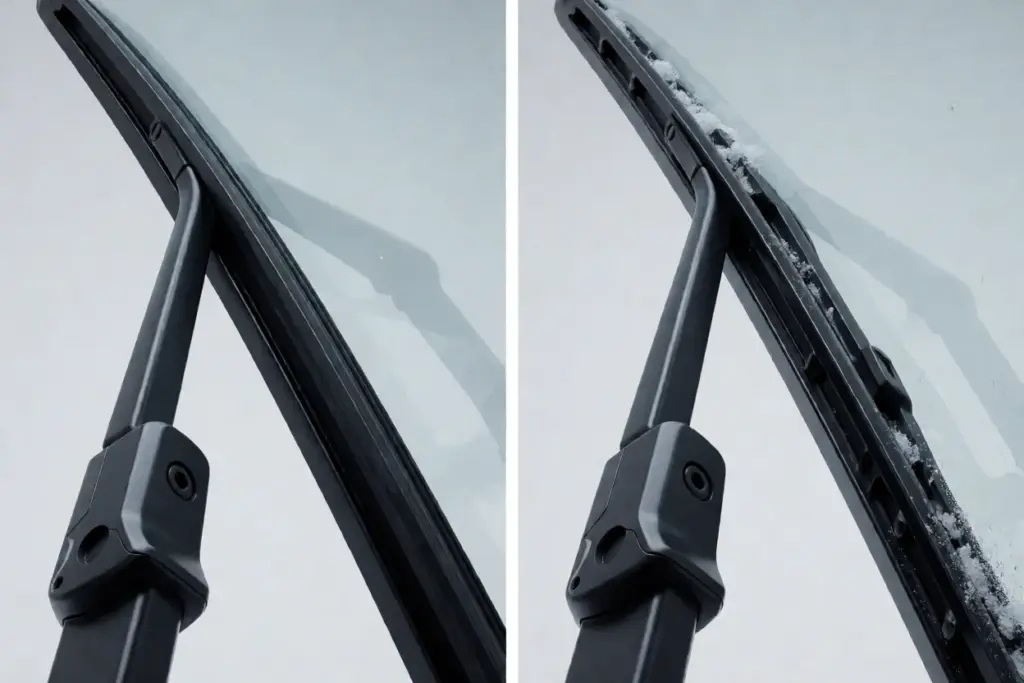
Bonded to the glass means the element is stuck along its contact line. The blade looks normal but will not move, or drags with the glass scraping. Structure icing means snow and ice have packed into the frame, around the adapter, or inside a boot or cover. The element may be free while the blade still cannot follow the glass, and the parts most at risk are the arm and the linkage rather than the rubber.
Working sequence for either case:
- Start the vehicle and run the front demister on a warm, not maximum, setting, pointing at the screen. Give it several minutes. This is the route the vehicle’s own system was designed for.
- Clear loose snow and ice from around the blade ends, the cowl channel and the wiper arc. Ice at the base of the glass is a common cause of a blade that stalls mid-sweep after the contact line has freed.
- Check the arm travel by hand once the edge looks free. With the ignition off, lift the arm slightly and see whether the blade releases cleanly. If it still holds, give it more thaw time rather than more force.
- Only then run the wipers, and switch them off before the dry cycle ends. Parked wipers on a cold screen should not be left to cycle against ice.
Three things to avoid, all of which show up as damage claims later. Pulling a bonded blade off by hand can distort the frame and overload the arm spring. Switching the wipers on to “break the ice” puts the full stall load through the motor, linkage and element, and a torn or nicked element is not always visible in daylight. Pouring boiling water over the glass is a shortcut worth avoiding for two reasons: a sudden temperature change stresses glazing that already has a chip or an edge crack, and the water usually refreezes as a sheet across the area it just cleared.
If you are not sure which parts carry the load in a given design, our breakdown of the parts of a windshield wiper explains what sits between the arm and the wiping edge, and why a blade that has been forced often comes back with a bent adapter rather than a torn rubber.
Can Winter Wiper Blades Stop the Problem?
Partly, and it is worth being precise about which part, because an over-claim here is a return complaint waiting to happen.
A winter or snow blade typically adds a covered frame or boot and a wiping compound formulated to stay workable at low temperatures. That reduces structural icing: snow has less exposed hardware to pack into, and the blade keeps pressing evenly when it is cold. It does not change the physics at the contact line. A winter blade parked on a wet, cold screen will still bond to the glass overnight, because the water between the element and the glass is what freezes, not the frame.

So a winter blade is the right answer when the customer’s real complaint is snow packing, ice build-up in the frame, or a blade that goes stiff and starts skipping in hard frost. It is not a substitute for clearing the screen and drying the edge, and we would not recommend describing any blade as freeze-proof in a listing or on packaging.
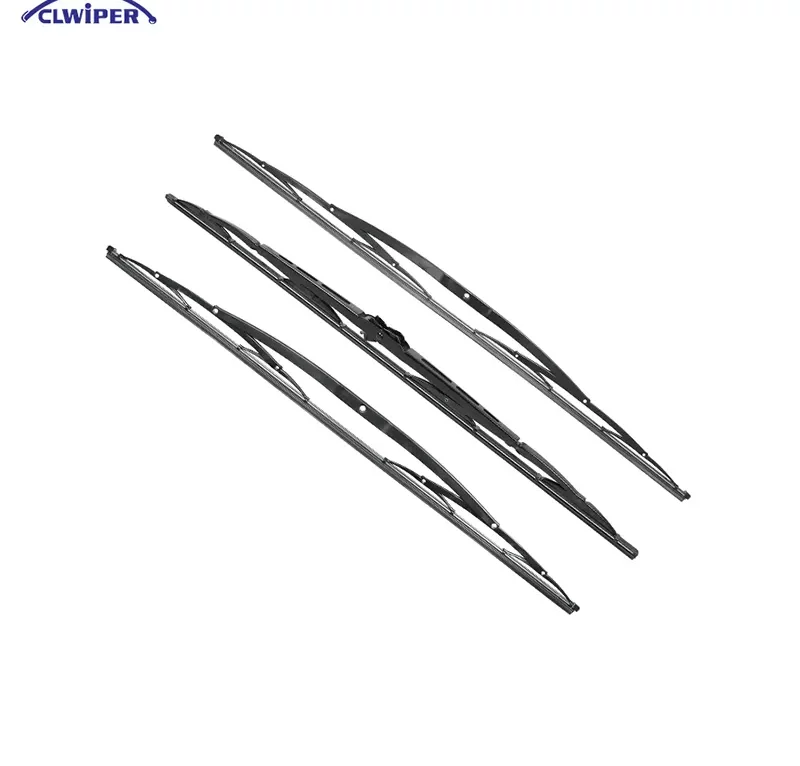
For the underlying comparison, the technical guide to winter and all-season blades covers construction, compounds and which markets each one suits, while our review of the 最高の冬のワイパーブレード looks at specific retail lines. On the CLWIPER side, the snow blade category and the CL800 snow blade list the adapter set, available sizes and packaging we ship for cold-climate programmes; confirm the tested temperature range and adapter coverage for the specific article before publishing a claim on either.
How Do You Check the Blades After Thawing?
A frozen blade that works afterwards is not automatically undamaged. Ice that packed a frame and a blade that was pulled off the glass leave different traces, and both are worth catching before the next storm.
- Wiping edge: run a fingertip along the element. Look and feel for nicks, 涙, a rolled or flattened edge, and any section that has taken a permanent set from being forced.
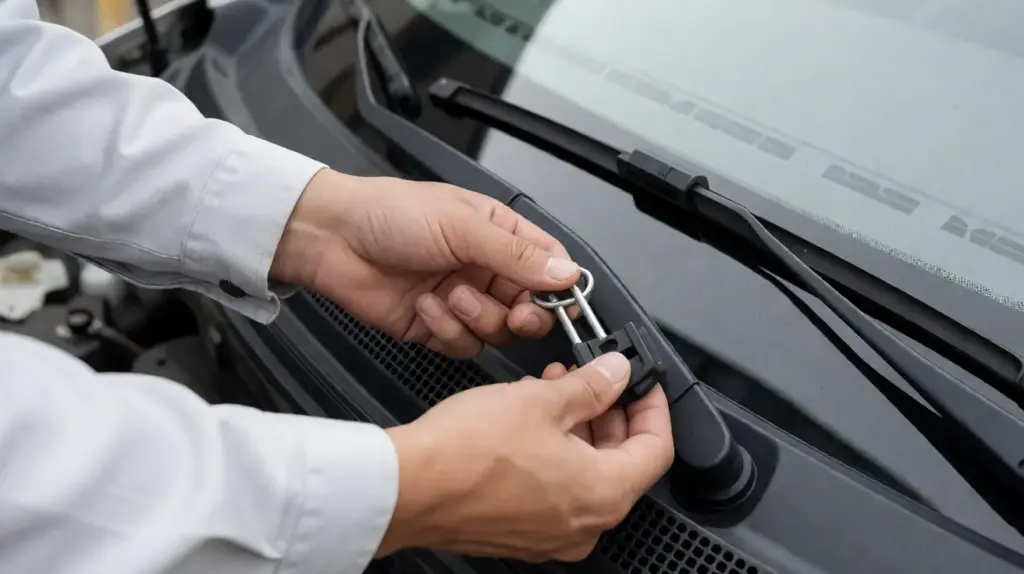
- Adapter and locking clip: check for distortion, a cracked housing, or a clip that no longer snaps back. Icing around the adapter is where most deformed clips come from.
- フレーム, spine and cover: look for a bent rail, a boot that has torn away at the end, or corrosion in the joints of a framed blade.
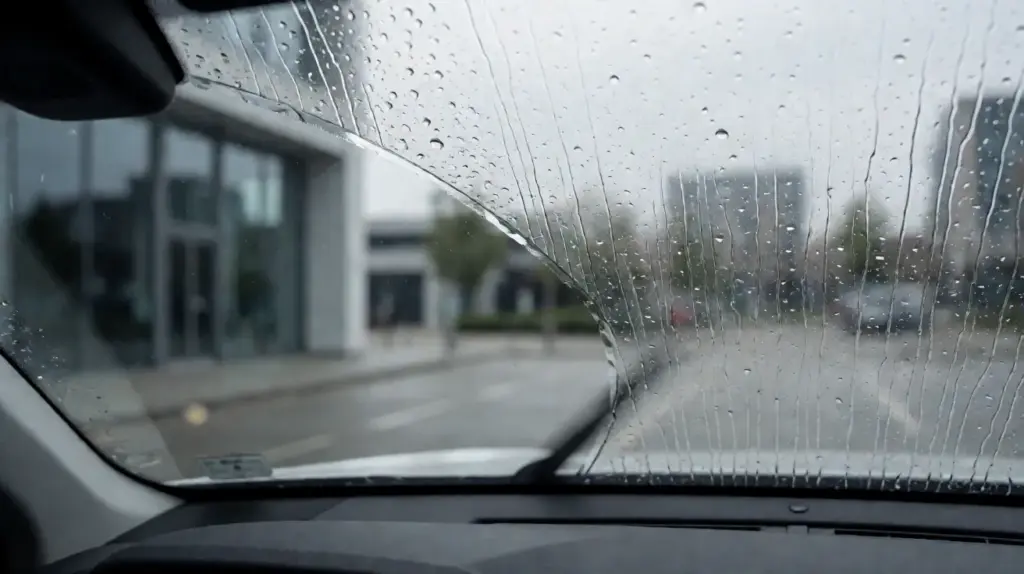
- Wipe test on wet glass: wash the screen, run the blade on a fully wet surface and watch for the three patterns that mean the blade or the glass has a problem. A first check that misses the wet-glass step is how a contamination issue gets blamed on the rubber.
Replace rather than keep the blade when the element is chipped or torn, when the frame is deformed, or when streaking and skipping survive a proper wash of both glass and edge. Hardened rubber is a separate diagnosis: if the element squeaks and skips in the dry cold but a full season of summer heat sits ahead of the next winter, our guide to signs that blade rubber has hardened is the place to start. For the wider replacement interval, see how often wiper blades should be changed, and the general fault list in our windshield wiper FAQ roundup.
Building a Winter Assortment?
FAQs About Frozen Windshield Wipers
Should I lift my wiper blades before it snows?
Only if the vehicle allows it. Blades that park under the cowl cannot be lifted by hand without a service position, and a raised blade in wind often falls back onto the glass. Where the arms are exposed and the blade stands upright on its own, lifting before a forecast snowfall is a reasonable habit. Otherwise, clear the snow and dry the wiping edge instead.
Can I pour hot water on frozen wipers to thaw them?
It is not a good shortcut. Boiling water against cold glazing can crack glass that already has a chip or an edge defect, and the water typically refreezes across the area it just cleared. The controlled route is the vehicle’s own front demister, plus clearing loose ice around the blade ends and the cowl channel.
Can I use the wipers to break the ice?
いいえ. A stalled blade puts full load through the motor, linkage and element, and it is one of the commoner ways an adapter gets bent or the rubber gets torn along the edge. Free the blade with heat and by hand-clearing first, then run the wipers only once they move freely.
Do winter wiper blades still freeze to the windshield?
はい. A covered frame and a cold-rated compound reduce ice packing inside the structure and keep the blade pressing evenly in frost, but the wiping edge still sits against a cold, wet screen when parked, and that water still freezes. Winter blades change how much snow and ice the blade has to carry, not whether the contact line bonds overnight.
If my blades froze once, do I have to replace them?
Not automatically. Inspect the edge for nicks and permanent flattening, the adapter and clip for distortion, and the frame for a bent rail, then run a wipe test on fully wet glass. If the blade passes all of that, keep it. Replace it when the element is torn, the structure is deformed, or streaking and skipping survive a proper clean of glass and edge.